
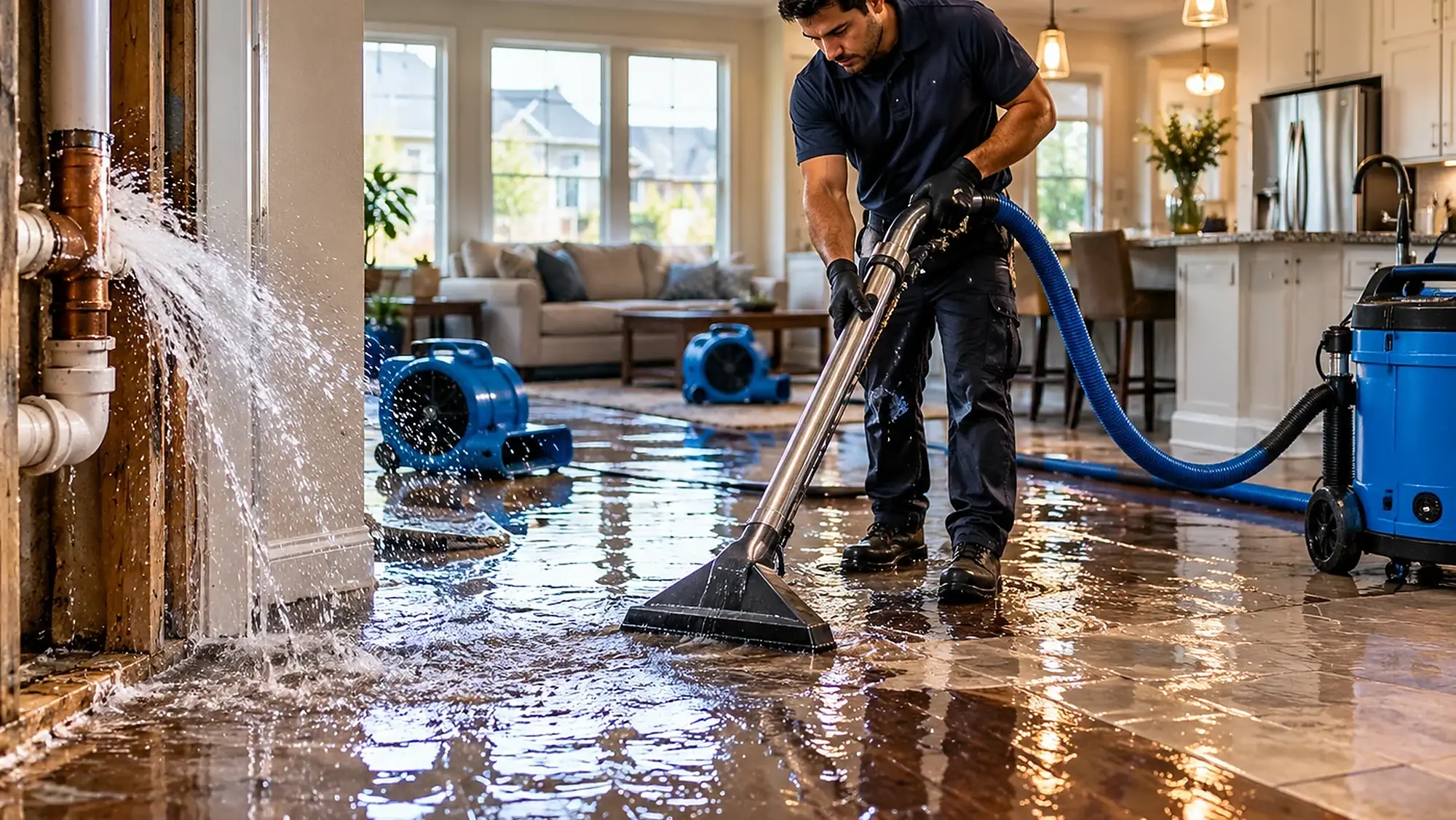
If water enters a home in Wilmer, begin with safety and source control when safe, then determine how far moisture moved into floors, walls, cabinets and other materials. In a new build, that check includes the builder-era plumbing and appliances the water came from.
Water Damage Restoration in Wilmer, TX: What the Job Actually Involves
Water damage restoration in Wilmer, TX is property level work: stop the source, extract the water, map the moisture, dry the structure to verified readings and document the loss. Wilmer is a fast-growing city on the I-45 corridor in southeast Dallas County, and it is served from our DeSoto base to the northwest. The city publishes its own municipal information for the public side. Inside the building line, the scope is the job described here, written for the specific house in front of us.
Wilmer's growth writes its water-loss pattern. Brand-new subdivisions stand a short drive from streets that have been there for generations, and the two halves fail differently. New homes leak from installation-era problems: a fitting that was never fully seated, a supply line pinched during construction, an appliance installed slightly wrong. Established homes leak from age. The assessment has to know which house it is standing in.
Common water-loss situations in the area
Most Wilmer calls come from a short list: supply line and appliance leaks in new builds, often discovered when a floor buckles or a cabinet base swells; water heater failures in both new and established homes; slab leaks; and storm water that finds the low side of a lot while surrounding development is still changing how the ground drains. Construction-phase drainage changes are a genuinely local factor: when the field next door becomes a subdivision, the water that used to spread out now goes somewhere specific.
New Roofs, New Pipes: Water Losses in a Growing Wilmer
A new home is not a dry home by default. The first years of a house are when installation defects show themselves, and water versions of those defects are unforgiving: a slow drip inside a wall can run from the first month, quietly wetting insulation, framing and subfloor, and only announce itself when flooring or baseboards finally show it. Warranty paperwork covers some of that story, but the drying cannot wait for the paperwork, because mold does not wait either.
The established half of Wilmer carries the older pattern: aging supply lines, water heaters at the end of their service life, and roofs that have seen many Texas storm seasons. Both halves share the same ground truth. Wilmer sits on the same expansive clay as the rest of southern Dallas County, slabs move with the seasons, and plumbing embedded in or under those slabs lives a harder life than the brochure suggests.
What a complete response should cover
A complete response covers five things in order: source control, so no new water enters the scope; extraction of standing water from floors, carpet and pad; moisture mapping that shows how far water actually traveled, including inside wall cavities; structural drying with air movement and dehumidification adjusted to readings; and verification, where final moisture numbers, not a calendar date, say the job is done. In a new build, the map also documents the defect's footprint, which the warranty conversation will need.
Why hidden moisture deserves attention
Hidden moisture is the main event in Wilmer's new-build losses. Water inside a wall or under an engineered floor can travel surprisingly far from a small, steady source, and the surface can look perfect while the assembly behind it stays wet. That is the setup for odor, swollen trim and mold inside a house that still smells new. Moisture meters and targeted inspection openings find the real boundary of the loss, and the readings, not optimism, decide what gets opened and what gets dried in place.
Wilmer public infrastructure reference
For the municipal side of a water problem, such as a suspected city line issue, a meter question or construction-related utility work nearby, the City of Wilmer publishes its information through its official website, linked in the sidebar of this page. City crews handle the public supply up to the property line. The water inside your home, and the damage it leaves behind, is the private side of the line, and that is the work this page describes.
Related water-damage services
Every city page connects to the same service pages, because a Wilmer loss rarely respects category lines. The services most often involved are:
- Water Damage Restoration: the full process from assessment through verified drying.
- Burst Pipe Water Removal: extraction after a pipe failure, with the repair itself left to your plumber.
- Structural Drying: measured drying of walls, floors and framing.
- Storm and Flash Flood Water: response after weather-driven intrusion.
- Sewage Backup Cleanup: contained cleanup for category 3 losses.
- Mold Remediation: containment and removal when growth follows a loss.
- Commercial Water Damage Restoration: the same process planned around a business staying open.
Frequently asked questions
How much does water damage restoration cost in Wilmer, TX?
Cost depends on how much area is wet, the water category, how long materials stayed saturated, and whether drywall, flooring or cabinets must be removed and repaired. A slow hidden leak costs more to map than a fresh visible one. No honest price exists before the assessment; compare the written scope and readings.
My Wilmer home is nearly new and already leaking. What should I do first?
Stop the water if you can do it safely, then photograph the failed fixture, line or appliance before anything is repaired or replaced. Call +1 972-945-2324 for extraction and drying, because mitigation cannot wait for a warranty decision. Keep every photo and reading; that documented file supports both the insurance claim and the builder warranty claim.
Does homeowners insurance cover water damage in Wilmer?
Most Texas homeowners policies cover mitigation for sudden, accidental losses, like a burst pipe or an appliance failure, because fast response limits further damage. A builder warranty is a separate path for installation defects in newer homes. Many Wilmer losses qualify for both conversations, and the same documentation serves both.
How fast should water be removed from a Wilmer home?
As soon as it is safe to start. Extraction in the first day limits how far water spreads into walls and under floors, and early drying usually decides whether flooring and drywall can be saved. In new builds, fast action also preserves the evidence of what failed, which matters if a warranty claim follows.
Can mold grow in a brand-new Wilmer home after a leak?
Yes. Mold does not care how old the house is; it needs moisture and material, and a slow leak inside a new wall provides both. Growth can begin within one to two days on damp drywall and wood. If found, it is handled as its own remediation scope after the source is stopped and dried.
Is there emergency water extraction near me in Wilmer?
Yes. Wilmer is served from the DeSoto base on Osprey Dr, northwest via the I-35E corridor, around the clock. The response covers extraction, structural drying and moisture verification for homes across the city, from the newest subdivisions to the established streets. Call +1 972-945-2324 whenever the loss happens.
What to Do in the First Hour of a Water Loss in Wilmer
First, protect people: keep clear of water near outlets, appliances and the breaker panel. Second, stop the source if you can do it safely, at the fixture valve or the home's main shutoff; in a new build, note which fixture or line failed before you touch it. Third, call +1 972-945-2324 with the source and the rooms affected. Fourth, photograph everything, including the failed part itself, before anything is moved or repaired. That photo set serves both the insurance claim and any builder warranty claim.
Water Damage Repair in Wilmer TX: What a Complete Job Includes
Repair follows mitigation, and the two should not be confused. A complete job here means the structure is extracted, dried and verified, damaged materials that cannot be dried are removed cleanly, and the loss is documented well enough that the repair phase starts from facts: which rooms were wet, which materials were affected, and what the final readings were. Where a builder warranty applies, that same documentation is the evidence package, so it is built carefully from day one.
Documentation That Protects a Wilmer Claim
Insurers pay claims they can verify, and builders honor warranties they cannot dispute. The file for a Wilmer loss should include dated photos before, during and after the work, moisture readings with locations, a list of affected materials and rooms, and notes on the source, including the failed part where there is one. Keep the purchase paperwork for a newer home with the file. That combination is what turns a leak in a new house into a resolved claim instead of two arguments.
Serving Wilmer From Our DeSoto Base
Wilmer is served from 1603 Osprey Dr #11 in DeSoto, northwest via the I-35E corridor. The same crew that answers the phone handles the extraction, returns for drying checks and closes the job with verification readings, for the new subdivisions and the established streets alike. One local team, one documented process, from the first call to the final numbers.