
A failed sump pump can leave lower levels wet quickly, especially when water is moving faster than floor drains or collection systems can handle. Emergency Water Extraction in DeSoto TX
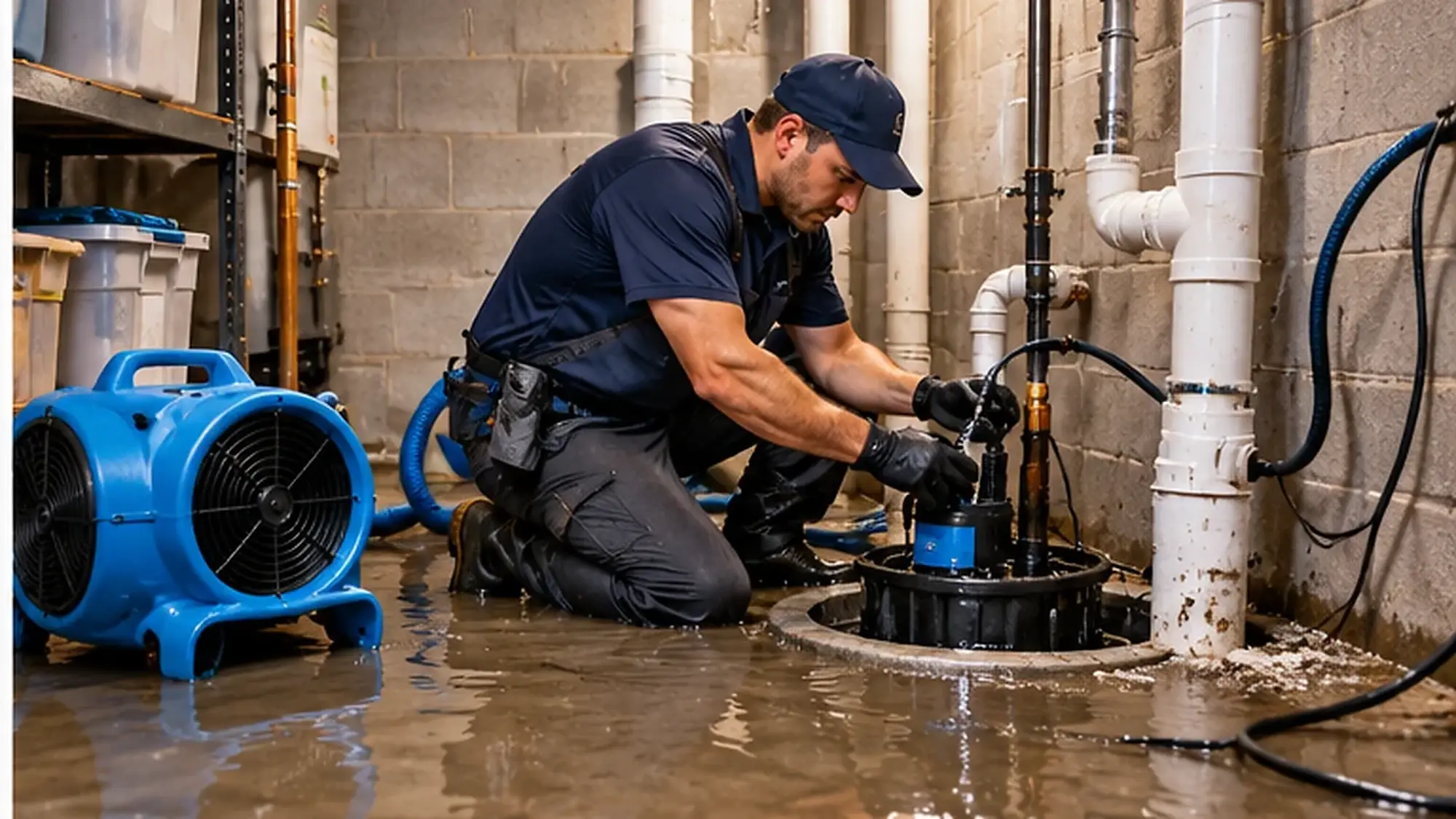
Sump Pump Failure Cleanup in DeSoto TX: Failed at the Worst Moment
Sump pump failure cleanup in DeSoto TX begins from a frustrating pattern: pumps fail during storms, because storms bring both the water and the power outages, float obstructions and overwhelmed intakes that stop pumps. When the pump stops, the pit it serves becomes the entry point, and water spreads from the lowest area of the basement or crawl space outward into wall bases, flooring and stored belongings. The cleanup scope is the water's, not the pump's: extraction, removal of unsalvageable wet material, cleaning and sanitising where the water carried soil, and structural drying verified by readings. The failed pump itself is documented carefully, because its story is central to the insurance conversation.
The flooded space itself is handled under basement flood extraction, and the 24/7 response is at emergency water extraction desoto tx.
Why sump failures can spread quickly
Lower-level water may reach finished floors, stored contents, electrical equipment, walls and insulation. The faster the water rises, the more important it becomes to separate immediate safety from recovery decisions.
- Do not enter unsafe electrical areas.
- Identify where water first accumulated and how far it spread.
- Inspect lower-level materials that can trap moisture.
How the water-loss problem develops
A failed sump pump can leave lower levels wet quickly, especially when water is moving faster than floor drains or collection systems can handle.
The visible symptom is only one part of the assessment. Water can move laterally along floors, travel under finish materials, wick into trim and drywall, or collect in cabinets and cavities. The correct next step depends on the source, the type of water, how long materials have been wet and whether the affected assembly can be dried safely.
What a thorough response should include
- Source and safety assessment: identify whether water is still entering and whether electrical, structural or contamination hazards are present.
- Moisture mapping: check the materials that could have absorbed water, not only the obvious puddle or stain.
- Extraction: remove standing or recoverable liquid water before deeper drying.
- Controlled drying: use airflow and dehumidification appropriate to the materials and environment.
- Progress verification: compare follow-up readings to an appropriate unaffected baseline or other defensible drying target.
- Cleaning and material decisions: separate cleanable materials from materials that are contaminated, swollen, delaminated or otherwise unlikely to recover.
Why the surrounding materials matter
Water damage is rarely confined to the material that first gets attention. Carpet may sit over pad and subfloor. A ceiling stain may connect to insulation or framing above. A kitchen leak can reach toe-kicks and cabinets. A crawl-space leak can affect joists and underside flooring. Looking at the full moisture path helps avoid both unnecessary demolition and incomplete drying.
What to do before help arrives
- Control or isolate the source when safe and practical.
- Keep people away from standing water around energized electrical equipment.
- Move portable valuables only when doing so will not create a safety or damage risk.
- Photograph the source, affected rooms, visible materials and damaged contents.
- Write down when the incident was discovered and what actions were taken.
- Do not use household fans around contaminated water or electrical hazards.
Insurance documentation
Coverage depends on the policy and cause of loss. Good documentation can still make the conversation easier: photos, a simple timeline, affected rooms, damaged contents, source-repair records and moisture/drying information when available. Do not promise coverage or payment; the carrier decides what the policy covers.
Why Sump Pumps Fail During the Storm That Needs Them
The failure modes cluster. Power loss is the simplest: no electricity, no pump, and storms take down power exactly when inflow peaks. Float and switch failures come next: a float wedged against the pit wall or a switch worn out by years of cycles. Then capacity: an undersized or aging pump that runs continuously and still loses ground. Debris in the pit and a frozen or blocked discharge line finish the list. Every one of these is checkable in calm weather, which is the honest prevention message: the ten minute seasonal test is worth more than any cleanup discount.
Frequently asked questions
What happens when a sump pump fails during a storm?
The pit keeps filling with nowhere for the water to go, overflowing at the lowest point and spreading into wall bases and stored belongings. During a storm the inflow is at its highest exactly when failures happen, from power loss, a stuck float, a failed switch or a pump that simply cannot keep up.
Does homeowners insurance cover sump pump failure?
Often only with a specific endorsement. Many Texas policies treat sump overflow as an add on cover with its own limit, not a standard one. The declarations page settles it; general advice cannot. If you are unsure, ask the carrier to confirm in writing, and document the failure either way, because the record protects whichever claim applies.
How fast does a basement flood after a sump pump fails?
Quickly, during active rain. A failed pump in a storm can put inches of water across a basement floor within hours, because the system is designed to collect groundwater at that point. The speed is why backup power and alarms exist for sump systems. For cleanup, your documented timeline, when the storm hit and water was found, genuinely matters.
Can you prevent sump pump overflow damage?
The main protections are mechanical: a battery backup pump covers power outages, a water powered backup covers pump failure where pressure allows, a high water alarm buys response time, and seasonal float and check valve tests catch failures early. None removes the need for cleanup after failure, but they convert most failures from a flood into a nuisance.
What does sump pump failure cleanup include?
Extraction of standing water, removal of unsalvageable materials, cleaning and sanitising where water was contaminated, and structural drying of walls, framing and flooring verified by readings. The failed pump is a plumbing item outside the water scope, and the documentation records the failure clearly, because that record is what the insurance conversation builds on.
My sump pump failed, who can clean up near me in DeSoto?
Call +1 972-945-2324 and this DeSoto crew will extract the water that collected after the failure, then dry the affected rooms and materials. Sump failures usually surface during the storms that cause them, so while you wait, avoid the standing water if outlets or appliances are nearby, and photograph the damage.
Use these primary sources for safety, moisture control, flood information and restoration-standard context.
Lower-level areas to check
Lower-level areas to check should be based on the actual water path, material type and duration of exposure. A useful assessment does not assume every item is damaged; it checks the places that could reasonably have been reached and then uses condition and moisture information to decide what happens next.
- sump pit and discharge path
- walls and baseboards
- floor seams
- stored contents
- mechanical equipment areas
- crawl-space transitions or adjacent rooms
What the homeowner can do before the assessment
Move safely recoverable belongings away from the wet area, keep notes about when the problem started, and photograph the condition. Avoid unsafe electrical areas and do not create additional spread by aggressively moving contaminated water through an occupied space. When the source is a plumbing, roofing or appliance problem, coordinate source repair with the mitigation work so that drying is not undermined by continuing water entry.
It is also helpful to separate facts from assumptions. A ceiling stain does not automatically prove a roof failure; a wet carpet does not automatically mean every square foot needs replacement; and an odor does not prove mold without understanding the moisture history. The best next step is to identify what is known, what is suspected and what still needs to be checked.
What a good closeout looks like
By the end of mitigation, the homeowner should understand what happened, what areas were affected, which materials were cleaned, dried or removed, and what documentation was retained. For larger losses, a handoff package can make the transition to reconstruction easier because the next contractor can see the known moisture history rather than starting from scratch.
Service-specific restoration considerations
A sump failure can affect more than the pit area. Water may spread across a lower level, reach storage contents, wet wall assemblies and create long drying paths. Correcting the pump or discharge problem is separate from drying the building. Both need to be coordinated so the water source does not restart while mitigation is underway.
For property owners, the practical benefit of a detailed assessment is clarity. It helps distinguish the source repair from the mitigation work, identifies the materials that may need attention, and provides a record that can be used when discussing the loss with an adjuster or reconstruction contractor. If the source continues, the mitigation plan may need to be paused or revised; if readings remain elevated, drying may need to continue even when the room looks normal.