
Lower-level water can affect carpet, drywall, stored contents, electrical equipment and subfloor materials in ways that are not obvious from the surface. Emergency Water Extraction in DeSoto TX
Basement Flood Cleanup in DeSoto TX: Rare Here, Serious When It Happens
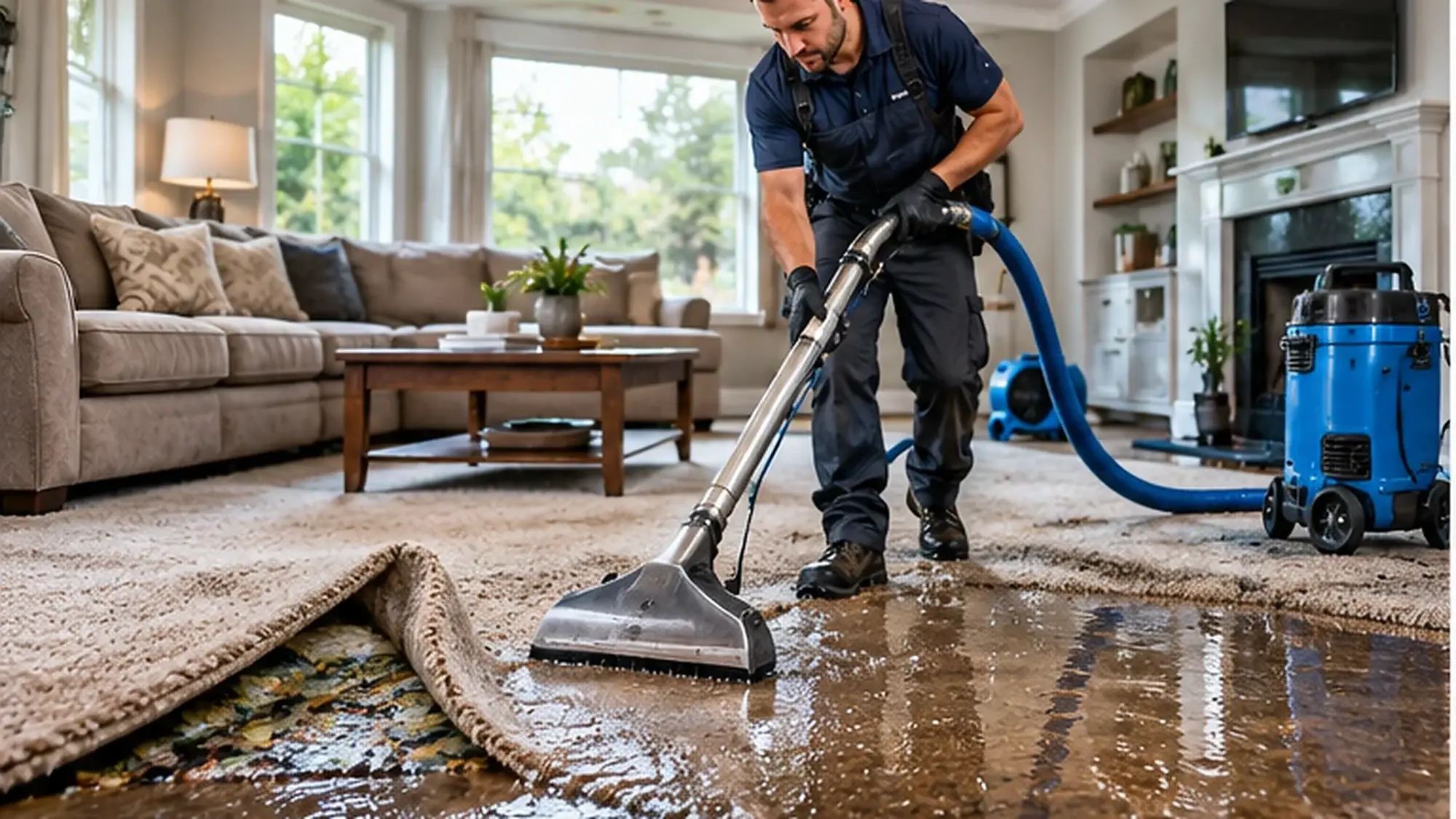
Basement flood cleanup in DeSoto TX starts with an honest local fact: most DeSoto homes do not have basements. Slab foundations on expansive clay soil are the regional norm, so this page serves the minority that do, along with below grade rooms, sunken areas and storm cellars, and it serves them properly. A flooded basement concentrates everything difficult about water damage in one space: volume, below grade walls that dry slowly, stored belongings, and often the home's electrical and mechanical equipment. Extraction is staged pumping followed by material level drying, verified by readings from walls, framing and flooring, because below grade assemblies give moisture back slowly and punish anyone who closes them early.
Basement losses often involve a failed pump, covered on the sump pump failure cleanup page; the emergency response is at emergency water extraction desoto tx.
Lower-level flooding affects more than the floor
Basements and other lower levels often contain finished flooring, stored contents, utilities, electrical equipment and porous materials. Water can move behind finished surfaces and into subfloor systems.
- Protect people first around electrical systems.
- Separate salvageable contents from contaminated or unsalvageable materials.
- Map moisture at floor edges, walls and lower-level cavities.
How the water-loss problem develops
Lower-level water can affect carpet, drywall, stored contents, electrical equipment and subfloor materials in ways that are not obvious from the surface.
The visible symptom is only one part of the assessment. Water can move laterally along floors, travel under finish materials, wick into trim and drywall, or collect in cabinets and cavities. The correct next step depends on the source, the type of water, how long materials have been wet and whether the affected assembly can be dried safely.
What a thorough response should include
- Source and safety assessment: identify whether water is still entering and whether electrical, structural or contamination hazards are present.
- Moisture mapping: check the materials that could have absorbed water, not only the obvious puddle or stain.
- Extraction: remove standing or recoverable liquid water before deeper drying.
- Controlled drying: use airflow and dehumidification appropriate to the materials and environment.
- Progress verification: compare follow-up readings to an appropriate unaffected baseline or other defensible drying target.
- Cleaning and material decisions: separate cleanable materials from materials that are contaminated, swollen, delaminated or otherwise unlikely to recover.
Why the surrounding materials matter
Water damage is rarely confined to the material that first gets attention. Carpet may sit over pad and subfloor. A ceiling stain may connect to insulation or framing above. A kitchen leak can reach toe-kicks and cabinets. A crawl-space leak can affect joists and underside flooring. Looking at the full moisture path helps avoid both unnecessary demolition and incomplete drying.
What to do before help arrives
- Control or isolate the source when safe and practical.
- Keep people away from standing water around energized electrical equipment.
- Move portable valuables only when doing so will not create a safety or damage risk.
- Photograph the source, affected rooms, visible materials and damaged contents.
- Write down when the incident was discovered and what actions were taken.
- Do not use household fans around contaminated water or electrical hazards.
Insurance documentation
Coverage depends on the policy and cause of loss. Good documentation can still make the conversation easier: photos, a simple timeline, affected rooms, damaged contents, source-repair records and moisture/drying information when available. Do not promise coverage or payment; the carrier decides what the policy covers.
Basements in DeSoto Are Rare, Which Is Why Their Losses Run Long
Rarity creates its own risk. A DeSoto basement may sit unchecked for days because the household routine never goes down there, and local trades see fewer of them, so the loss is often mature before the first call: saturated drywall, ruined stored contents, odor already established. The response therefore starts with a full moisture map rather than assumptions, and the documentation records the discovery timeline honestly. If your home is one of the few with a basement, a periodic look downstairs after storms and plumbing work is the cheapest protection there is.
Frequently asked questions
What do you do first when a basement floods?
Do not enter standing water if it may touch electrical panels, outlets or appliances, and treat outside flood water as contaminated. If safe, stop the source if it is a plumbing failure, photograph the water line and affected areas, and move dry belongings out of the water's path. Then call for extraction and a moisture map of the walls.
How is basement water extracted?
Standing water is pumped out in stages, remaining water is extracted from flooring and materials, and unsalvageable wet material is removed. Drying then runs against readings from drywall, framing and flooring, because a pumped out basement is drained, not dry, and the difference is measured in days of drying.
Can a finished basement be dried in place?
Parts of it, sometimes. Hard surfaces and framing can be dried in place when the water was clean and brief. Finished materials are less forgiving: soaked drywall, carpet, pad and laminate often cannot be dried reliably and are removed so the structure behind them can be. Water category and standing time decide, material by material.
How long does basement drying take?
Below grade spaces dry slower: cooler temperatures, limited airflow and soil contact walls work against evaporation. A clean water loss may dry in several days; a finished basement with saturated assemblies takes longer and is released only on verified readings. Closing drywall over a damp wall is how a dry looking space grows mold behind the finish.
Does homeowners insurance cover basement flooding?
It depends on the source. A burst pipe or water heater failure inside the home is commonly a covered mitigation question. Rising outside water or drain backup is usually excluded or limited without endorsements or a separate flood policy. Because DeSoto basements are rare, policy wording matters more than local custom; document the source carefully.
Who extracts basement flood water near me in the DeSoto area?
This service extracts lower-level flood water in the DeSoto area, covering the homes here that do have basements, below-grade rooms or storm cellars. Most DeSoto houses are slab homes without basements, but where a lower level exists, the response is extraction, drying and moisture verification, based from Osprey Dr in DeSoto.
Use these primary sources for safety, moisture control, flood information and restoration-standard context.
Basement-specific drying concerns
Basement-specific drying concerns should be based on the actual water path, material type and duration of exposure. A useful assessment does not assume every item is damaged; it checks the places that could reasonably have been reached and then uses condition and moisture information to decide what happens next.
- masonry and concrete surfaces
- carpet and pad
- finished walls
- stored boxes and textiles
- mechanical/electrical areas
- stairs and floor transitions
What the homeowner can do before the assessment
Move safely recoverable belongings away from the wet area, keep notes about when the problem started, and photograph the condition. Avoid unsafe electrical areas and do not create additional spread by aggressively moving contaminated water through an occupied space. When the source is a plumbing, roofing or appliance problem, coordinate source repair with the mitigation work so that drying is not undermined by continuing water entry.
It is also helpful to separate facts from assumptions. A ceiling stain does not automatically prove a roof failure; a wet carpet does not automatically mean every square foot needs replacement; and an odor does not prove mold without understanding the moisture history. The best next step is to identify what is known, what is suspected and what still needs to be checked.
What a good closeout looks like
By the end of mitigation, the homeowner should understand what happened, what areas were affected, which materials were cleaned, dried or removed, and what documentation was retained. For larger losses, a handoff package can make the transition to reconstruction easier because the next contractor can see the known moisture history rather than starting from scratch.
Service-specific restoration considerations
Lower-level flooding deserves a wider safety check because electrical equipment, mechanical systems and stored contents may be close to floor level. Concrete and masonry can retain moisture, while carpet, drywall and cardboard respond more quickly. A basement plan should therefore combine safe access, extraction, material assessment and humidity control.
For property owners, the practical benefit of a detailed assessment is clarity. It helps distinguish the source repair from the mitigation work, identifies the materials that may need attention, and provides a record that can be used when discussing the loss with an adjuster or reconstruction contractor. If the source continues, the mitigation plan may need to be paused or revised; if readings remain elevated, drying may need to continue even when the room looks normal.