
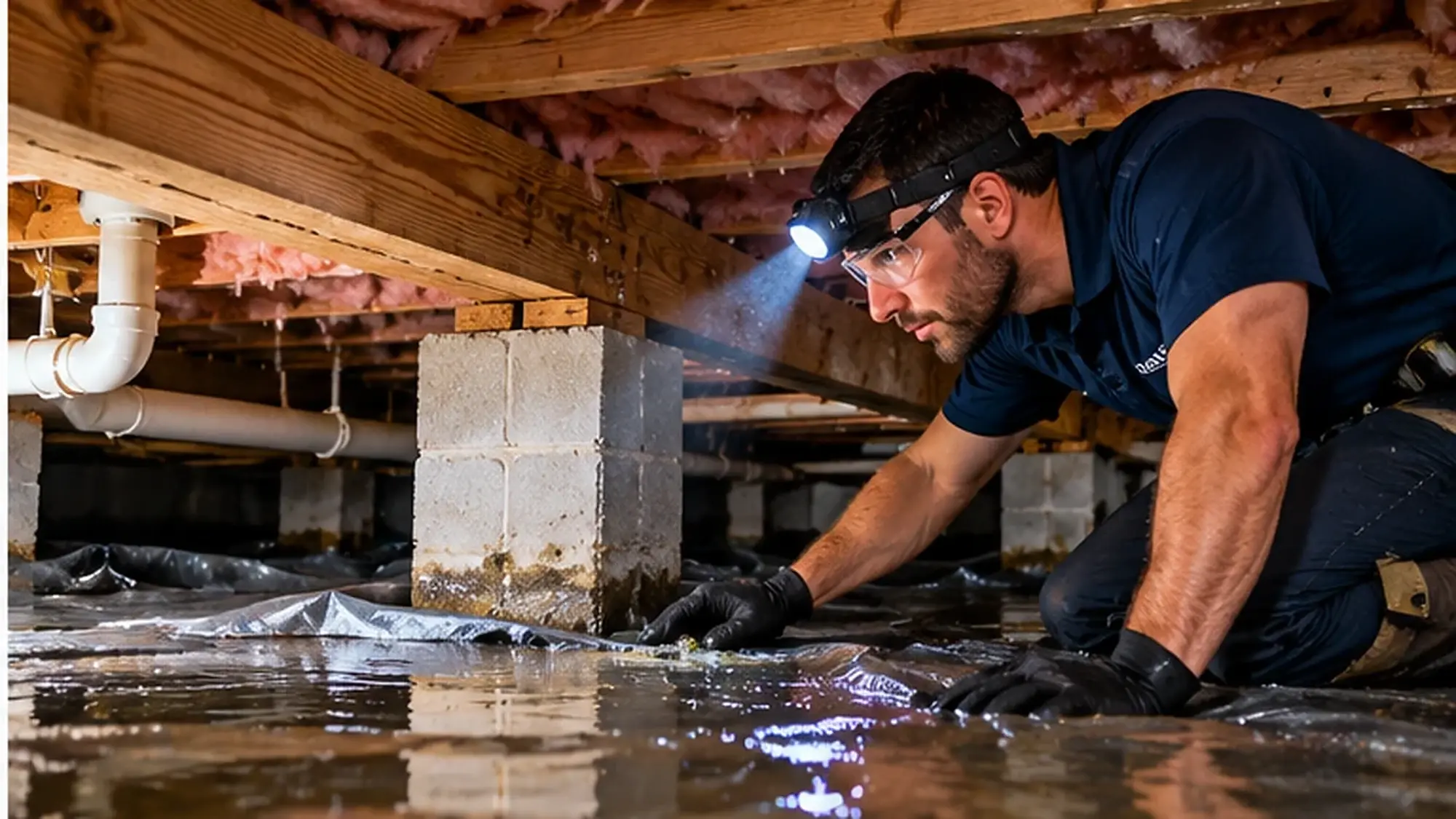
Keep people and pets away from electrical hazards, contaminated water and unstable materials. Do not enter a flooded area just to retrieve belongings if the safety conditions are unknown. Severe-weather events should follow official emergency instructions first....
For local water-loss help in DeSoto, see Emergency Water Extraction in DeSoto TX.
1. Make the area safe
Keep people and pets away from electrical hazards, contaminated water and unstable materials. Do not enter a flooded area just to retrieve belongings if the safety conditions are unknown. Severe-weather events should follow official emergency instructions first.
2. Control the source when possible
Shut off a plumbing source when it is safe and practical. If the issue is a roof leak, appliance failure or sewer backup, the source may require another trade or utility response. The important point is to stop additional water from entering before focusing only on the visible cleanup.
3. Photograph the loss
Take wide and close photos of rooms, flooring, walls, contents and the apparent source. Record the date and a short description of what happened. Avoid putting yourself in a hazardous position to capture a picture.
4. Check beyond the obvious puddle
Water can move into carpet padding, cabinets, drywall, subflooring and adjacent rooms. Look for changes in flooring, baseboards, odors and ceiling or wall staining. If hidden moisture is likely, a more detailed assessment can help identify where drying is required.
5. Remove standing water and begin drying
Extraction and drying are separate stages. addresses the wider response, while targets retained moisture in the building. Drying should be based on the materials involved and monitored conditions rather than a fixed number of days.
6. Be careful with contaminated water
Sewage, outdoor floodwater and water of uncertain origin require a more cautious response. Do not treat contaminated water like a clean plumbing spill. Isolation, material assessment and sanitation may all become part of the plan.
7. Keep records for the next conversation
Save photographs, notes, invoices, moisture records and communications. Ask your insurance carrier what information they need before major removal decisions when practical. Coverage remains policy-specific.
A simple way to prioritize
Think in this order: safety, source, spread, absorbed moisture, documentation. That sequence keeps the response practical and prevents the common mistake of focusing on cosmetic cleanup while the underlying water problem remains.
Use a simple decision order
In a stressful event, homeowners can reduce confusion by working through the same sequence every time: safety first, source second, spread third, absorbed moisture fourth, documentation throughout. This order prevents the common mistake of focusing on appearance before the water problem is controlled.
The sequence also makes conversations with plumbers, roofers, restoration providers and insurers easier because each person can understand what has already happened.
When a homeowner should escalate the response
Professional assessment becomes more useful when water is spreading, when structural materials are wet, when the water category is uncertain, when there is a risk of hidden moisture, or when the property cannot be safely dried with ordinary household methods.
The goal is not to make every small spill into a restoration project. It is to recognize the point where uncertainty or consequence is large enough that a documented assessment adds value.
Different causes need different next steps
A burst pipe may require source shutoff and extraction. An appliance leak may require moving the appliance and checking the cabinetry. A ceiling stain may require roof or plumbing source tracing. Sewage and outdoor floodwater require extra caution because contamination can change the cleanup plan.
Use local and official information for context
The City of DeSoto provides public information about drainage and stormwater, while federal agencies publish cleanup and flood-safety guidance. Those sources can help with public-safety context. The private-property response still depends on what entered the building, where it traveled and which materials were affected.
Keep the recovery organized
Water-damage events can involve a plumber, roofer, restoration contractor and insurer. Keep one running timeline for the property. Add the source, photos, affected rooms, mitigation steps and any follow-up repairs. When a new person joins the response, they should be able to understand the situation without starting from scratch. Organization is especially useful when the property is occupied and the work must be phased around normal routines.
Do not let cosmetic cleanup replace moisture control
Mopping, wiping and deodorizing can make a room feel better, but those steps do not answer whether the structure is dry. If water reached carpet padding, drywall, cabinets or subflooring, the hidden condition still matters. Once the source is controlled and standing water is removed, use the material and moisture condition to decide whether further drying or removal is needed.
What a strong next-step call should include
When calling about water damage, be ready to describe the suspected source, which rooms are affected, whether water is still present, whether the water may be contaminated and whether electrical components are involved. Those details help the next person understand the urgency without requiring the homeowner to diagnose the entire event.
Common questions
What should I do first after water damage?
Make the area safe and control the source when it is safe to do so.
Should I photograph before cleanup?
Yes, when it can be done without creating a safety risk.
When is professional help useful?
When water is spreading, materials are wet, contamination is suspected or hidden moisture is likely.
Call +1 972-945-2324 and describe the source, affected area and water type for next-step guidance.
Call +1 972-945-2324