Water damage refers to the physical effects of unwanted water on a property and its contents. Water mitigation is the set of actions used to control the loss, remove standing water, limit further spread, dry affected materials and reduce the chance of additional damage. Restoration may continue beyond mitigation with repairs or rebuilding....
For local water-loss help in DeSoto, see Emergency Water Extraction in DeSoto TX.
Water damage describes the condition; mitigation describes the response
Water damage refers to the physical effects of unwanted water on a property and its contents. Water mitigation is the set of actions used to control the loss, remove standing water, limit further spread, dry affected materials and reduce the chance of additional damage. Restoration may continue beyond mitigation with repairs or rebuilding.
Why the distinction matters
A homeowner may think the job is finished once the puddle is gone. In reality, water can remain in subfloors, drywall, cabinets, insulation and other assemblies. Mitigation focuses on controlling those conditions before they create a larger repair problem.
Typical mitigation stages
A practical sequence is source control, safety assessment, extraction, moisture mapping, controlled drying and follow-up verification. The exact order changes with the type of water and the property. is the broader service, while focuses on retained moisture in the building.
Mitigation is not demolition by default
The purpose of mitigation is not to remove the maximum amount of material. Some materials can be dried or cleaned successfully when the water category and condition allow it. Others may be too damaged, swollen, contaminated or delaminated and need removal. The decision should follow evidence from inspection and material condition.
How mitigation and insurance intersect
Mitigation records can help show the condition of the property and the actions taken to reduce additional damage, but mitigation does not determine whether a claim is covered. Keep photographs, dates, invoices and moisture records and ask the carrier what documentation it requires.
What homeowners should ask
Ask what source has been controlled, which areas are wet, how moisture will be measured, what materials are being evaluated for salvage, and how the team will determine when drying is complete. Those questions help distinguish a measured mitigation plan from a simple cleanup visit.
The DeSoto takeaway
The simplest way to think about it is: water damage is the problem; mitigation is the immediate process of controlling and stabilizing that problem; restoration and repairs come afterward. Keeping those stages separate makes the project easier to understand and document.
A simple example makes the distinction clear
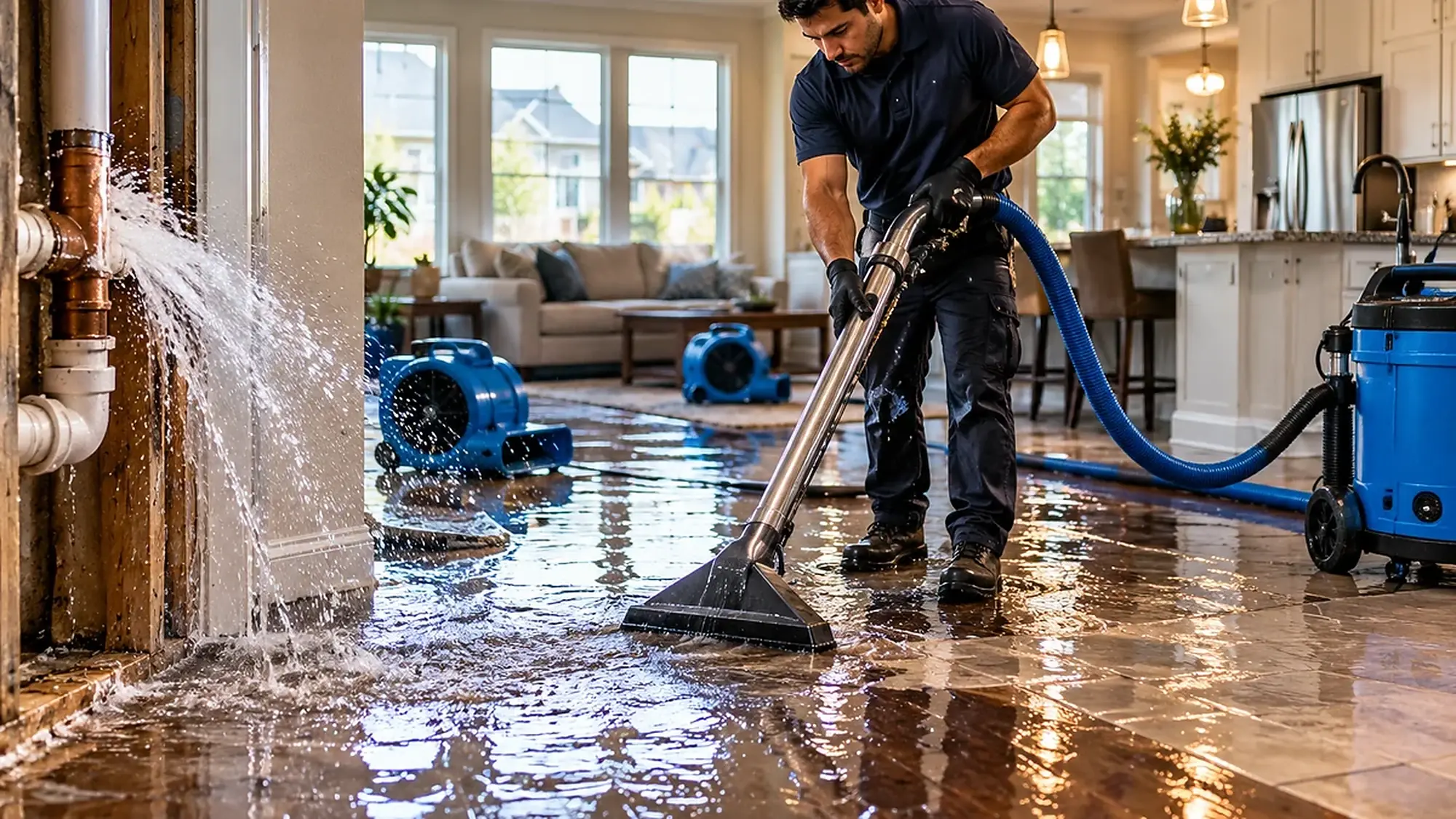
Imagine a washing machine supply line fails and puts water across a laundry room. The wet drywall and flooring are the damage condition. Shutting off the line, extracting water and drying the building are mitigation actions. Replacing damaged drywall or flooring later is restoration work.
The stages overlap in real life, but keeping the concepts separate helps homeowners understand what needs to happen immediately and what can be planned after the property is stabilized.
Why the service scope should be documented
A clear mitigation plan should identify the source, the affected areas, the materials being dried or removed and the measurements being used to judge progress. This is more useful than a generic promise to “restore the property” because it gives the owner a concrete picture of the work.
When repairs are separate from mitigation, document where the transition occurs so each party understands what is complete and what remains.
Mitigation decisions depend on evidence
Two homes can have the same amount of visible water and require different mitigation because the materials differ. One may have tile over a concrete slab; another may have carpet, pad and wood trim. The mitigation plan should follow the actual assemblies, not the appearance of the puddle alone.
Where repairs fit
Mitigation stabilizes the property so repairs can be planned on a better foundation. Once moisture targets are reached and unsalvageable materials are identified, rebuilding can proceed. Keeping these stages distinct helps the property owner understand the difference between emergency stabilization and the longer repair process.
Why terminology matters during an emergency
Clear terminology can prevent misunderstandings. When a contractor says “mitigation,” ask which stabilization steps are included and what remains for repair. When a contractor says “restoration,” ask whether the scope includes drying, cleaning, reconstruction or only a portion of the work. Understanding these terms helps property owners compare proposals based on actual scope rather than similar-sounding labels.
A homeowner-friendly way to compare scopes
When reviewing two mitigation proposals, compare the actual work: source assessment, extraction, moisture mapping, drying, cleaning, monitoring and documentation. Two contractors may use different labels for similar work, while a similar label can also hide different scopes. Clear task descriptions make the difference easier to see than broad terms such as “full restoration.”
Do not confuse emergency response with final restoration
During an active loss, the priority is stabilization. Final repairs can require different trades and a different timeline. Thinking of mitigation as the emergency stabilization stage helps property owners ask better questions about what must happen today and what can wait until the structure is ready for repair.
Common questions
Is water mitigation the same as repairs?
No. Mitigation stabilizes the water loss; repairs or rebuilding address the longer-term restoration.
Does mitigation mean removing everything?
No. Materials should be evaluated for cleaning, drying or removal based on evidence.
Why separate damage from mitigation?
It makes the response and scope easier to understand and document.
Call +1 972-945-2324 and describe the source, affected area and water type for next-step guidance.
Call +1 972-945-2324