
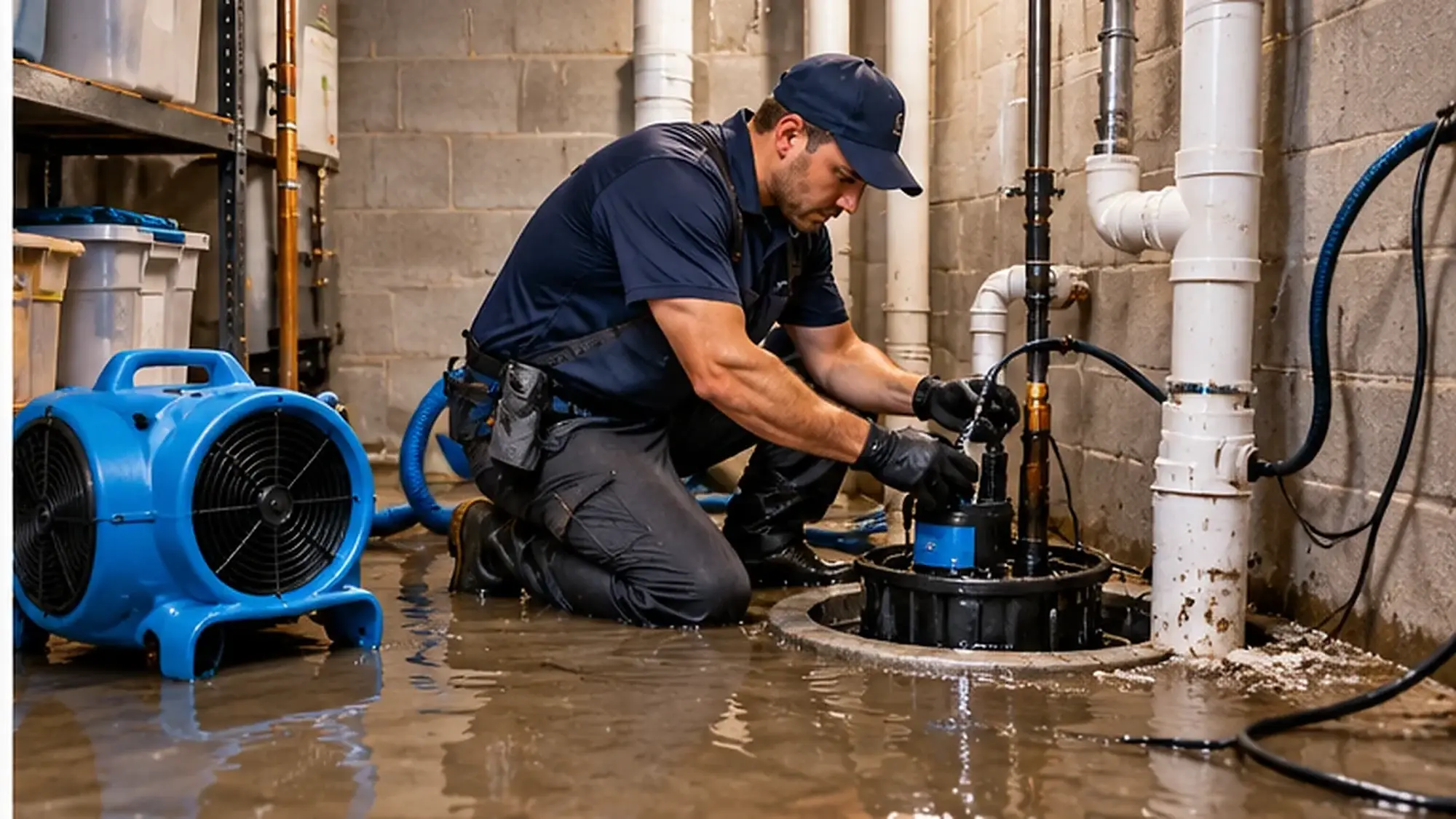
A failed sump pump is the source problem; the water already inside the building is the mitigation problem. Replacing or restarting the pump may stop additional water from entering, but it does not address water that has reached floors, walls, storage items or insulation....
For local water-loss help in DeSoto, see Emergency Water Extraction in DeSoto TX.
Treat the pump failure and the water as separate problems
A failed sump pump is the source problem; the water already inside the building is the mitigation problem. Replacing or restarting the pump may stop additional water from entering, but it does not address water that has reached floors, walls, storage items or insulation.
First steps
If the pump has lost power, check the electrical situation without entering unsafe water. If another pump or safe bypass is available, use it according to the equipment instructions. Keep people away from electrical hazards and contaminated water. Photograph the water line and affected contents before major cleanup when practical.
Why lower-level water spreads quickly
A basement or lower-level area can collect water across a broad floor footprint. Stored cardboard, carpet, wood products and drywall can absorb moisture before the room looks dramatically damaged. Water can also move under finished flooring or into wall bases.
Extraction and drying
Once the water source is stabilized, extraction reduces standing water. is focused on the loss scenario, while addresses moisture retained in the building materials. Drying targets should be verified rather than guessed from how the room feels.
Stored contents and lower-level materials
Move unaffected belongings to a dry area. Porous boxes, paper, textiles and wood products can hold water and may need separate salvage decisions. The lower-level floor and wall edges should be checked even when water has already been pumped out.
If the water is contaminated
If the sump failure involved sewage or outside floodwater, the cleanup plan changes. Keep the area isolated and do not assume household cleaners are sufficient. Contamination category affects material handling and sanitation.
Document the event
Keep the date of the failure, pump details if known, photos, affected rooms, receipts and mitigation records. If a pump replacement or plumbing repair is performed, keep those invoices with the loss documentation.
Separate pump repair from water-loss mitigation
The pump needs to be restored or another safe means of controlling incoming water needs to be established. At the same time, the interior water has to be removed from the property. Treating these as separate tasks makes the response easier to coordinate.
If the pump failed because of power interruption, mechanical failure or an overwhelmed system, keep notes about the apparent cause. That information can help when the pump or drainage system is later evaluated.
Lower-level storage deserves special attention
Basements and lower-level areas often contain boxes, seasonal goods, tools and stored documents. Cardboard and paper can absorb water quickly. Move unaffected contents first, then separate items by salvage potential and contamination exposure.
Finished walls and flooring can hide water even after a pump restores normal drainage. Check the edges and interfaces where water can remain trapped.
Check more than the pump
After the pump is operating again, inspect the floor edges, wall bases, stored contents and any finished flooring that covered the lower level. Water can remain in places that the pump could never remove directly. A functioning sump protects against new water; it does not dry the materials that already absorbed moisture.
Prepare for the next failure
After cleanup, note why the pump failed and what protective equipment or backup plan is available. Testing the pump according to its instructions and keeping the discharge route clear are maintenance steps that can reduce uncertainty during future heavy rain or power events.
What to inspect after the water level drops
When the lower level is no longer holding standing water, look at the waterline, wall edges, floor transitions, storage areas and any finished surfaces that were submerged. A repaired pump can restore drainage without removing moisture already absorbed by the building. Check the areas where water may have stopped against walls or beneath flooring, and keep a record of what was observed before the room returns to normal use.
What can remain wet after pumping
The pump removes water that can reach its intake, not moisture trapped inside carpet, drywall, wood, cabinets or stored materials. If water reached the perimeter of the lower level, inspect wall bases and flooring transitions even after the room is visually clear. A lower-level property often needs a drying plan that covers both the floor and the vertical materials around it.
When lower-level flooding needs a broader assessment
Call for a more complete assessment when water reaches finished walls, insulation, stored contents or multiple rooms, or when the water source is uncertain. Lower-level losses can hide moisture at the perimeter and beneath flooring, so the room may need more attention than the water level alone suggests.
Common questions
Does fixing the sump pump finish the job?
No. The building materials and contents still need to be assessed for moisture.
Can lower-level water spread under flooring?
Yes. Water can move beneath finished surfaces and into wall bases and stored contents.
What if the water may be contaminated?
Keep the area isolated and use a more cautious cleanup approach.
Call +1 972-945-2324 and describe the source, affected area and water type for next-step guidance.
Call +1 972-945-2324