
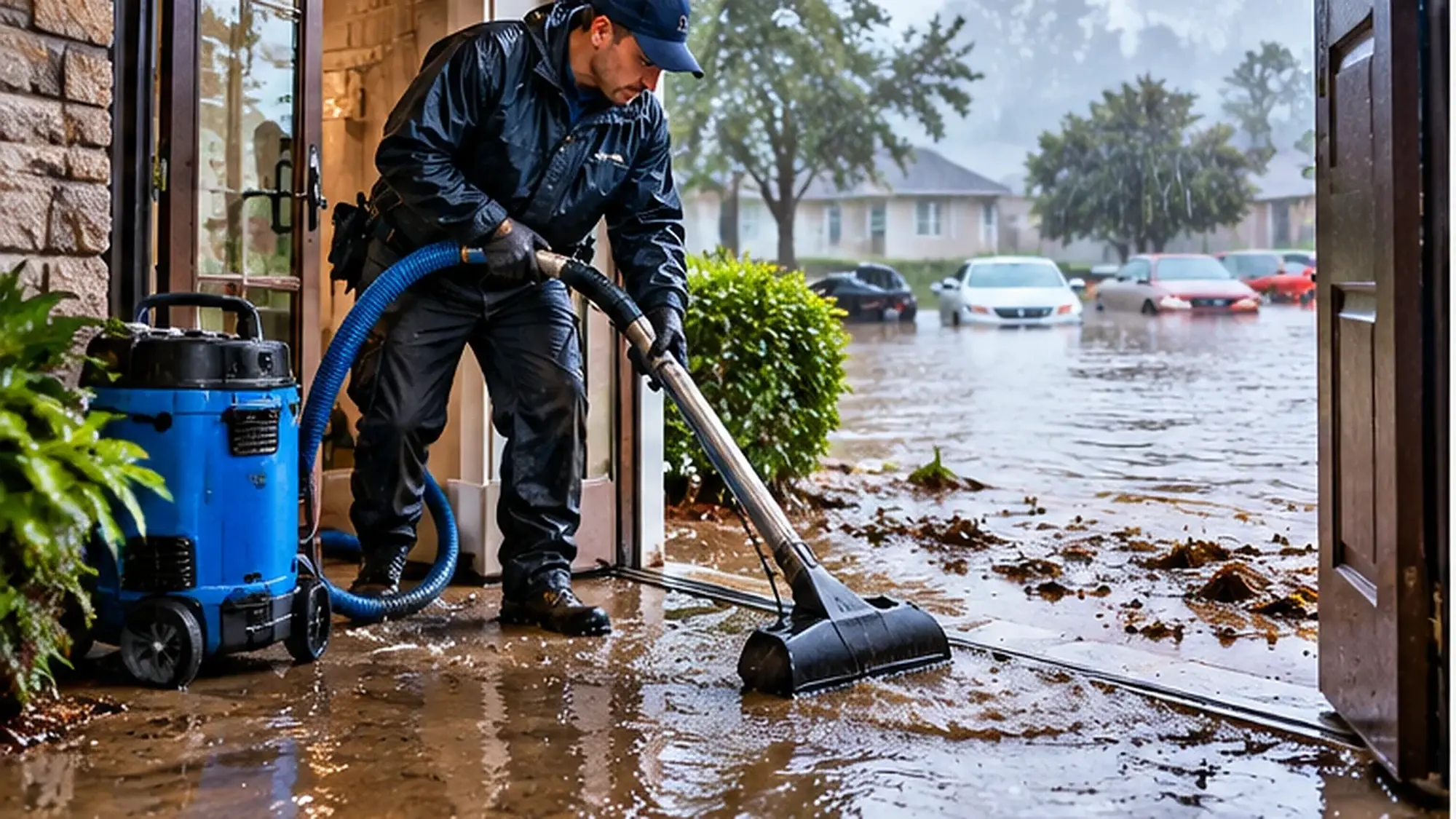
A sewage backup introduces contamination concerns that are different from a clean plumbing leak. The first decision is to isolate the area and keep people and pets away from contaminated water. The cleanup plan then depends on which materials were affected and whether they can be safely cleaned or need removal....
For local water-loss help in DeSoto, see Emergency Water Extraction in DeSoto TX.
Sewage is not a normal water-loss cleanup
A sewage backup introduces contamination concerns that are different from a clean plumbing leak. The first decision is to isolate the area and keep people and pets away from contaminated water. The cleanup plan then depends on which materials were affected and whether they can be safely cleaned or need removal.
Why the water category matters
The source, duration and path of the water influence risk. Water that starts clean can change when it contacts waste, soil or other contaminants. That makes source identification important before deciding how materials should be handled.
What to do before cleanup begins
Avoid direct contact, do not track contaminated water through unaffected rooms, and keep electrical equipment away from wet areas. Photograph the loss when safe and note the suspected source. If the backup continues, the plumbing problem must be addressed before the restoration process can reach a stable state.
Containment, removal and sanitation
A sewage cleanup may require containment, extraction, removal of unsalvageable porous material, cleaning of remaining surfaces and odor-control measures. The exact sequence depends on the materials and source. See and, for post-cleaning sanitation, .
Porous materials deserve special attention
Carpet pad, unfinished wood, drywall and insulation can hold contamination in ways that are difficult to clean reliably. Some nonporous surfaces may be cleaned and sanitized when appropriate. Material decisions should account for both contamination and structural condition.
Drying still matters after contaminated-water removal
Removing contaminated water does not eliminate retained moisture. Subfloors, framing, wall bases and other surrounding materials may still need drying. The goal is to prevent the sanitation phase from being followed by a new moisture problem.
Documentation for a sewage loss
Keep photos, dates, suspected source, affected rooms, material disposal records and mitigation invoices. Coverage depends on the policy and circumstances, but organized documentation helps describe the event accurately.
When to get professional help
Professional assessment becomes especially useful when the contamination is widespread, when water entered multiple assemblies, or when the source and category are uncertain. The safer approach is to control the exposure first and then work from a documented plan.
Category is a decision point, not just a label
The water category helps determine the precautions, materials handling and cleaning approach. A sewage backup may affect floors, walls, cabinets and contents differently depending on how far the contamination travelled and how long the materials stayed wet.
The source should still be corrected. If a sewer or plumbing issue continues to discharge water, cleanup work cannot move to a stable final condition until the source is controlled.
Why disposal decisions should be documented
When porous material cannot be cleaned reliably, document the affected material before removal when safe. Record what it was, where it was located and why removal was necessary. This creates a clearer record for property management and insurance discussions.
Hard surfaces and structural materials may be candidates for cleaning or drying depending on condition. The key is to tie each decision to the material and exposure rather than using a one-size-fits-all rule.
Different surfaces require different decisions
Nonporous materials can sometimes be cleaned and disinfected when conditions are appropriate. Porous materials can be much harder to restore after contamination. The decision should consider what the material is, how much contamination reached it, how long it stayed wet and whether safe cleaning is reasonably achievable.
Why the source repair still matters
A backed-up drain, failed sewer line or plumbing issue can continue introducing contaminated water. Interior cleanup should not be treated as complete while the source remains active. Source correction and interior mitigation should be coordinated so the restored area does not immediately become re-contaminated.
Why contamination and moisture must be handled together
A contaminated-water loss often creates both a sanitation issue and a drying issue. Removing sewage from the floor does not automatically mean the surrounding wall base or subfloor is dry. Likewise, drying a contaminated material without the right cleaning or removal decision does not solve the contamination problem. The response needs to address source, exposure, affected materials and retained moisture as one coordinated plan.
Questions to ask before contaminated materials are removed
Ask what material is affected, whether it is porous, what category of water reached it, and what cleaning or removal method is being proposed. Also ask how surrounding materials will be checked after the contaminated water is gone. The purpose is not to challenge every decision; it is to make the scope understandable and to keep cleanup, sanitation and drying connected.
Common questions
Why is sewage treated differently?
Because contamination changes safety, material handling, sanitation and disposal decisions.
Can porous materials always be cleaned?
No. Some contaminated porous materials may need removal depending on the material and conditions.
Does drying matter after sewage removal?
Yes. Surrounding materials can still retain moisture after contaminated water is removed.
Call +1 972-945-2324 and describe the source, affected area and water type for next-step guidance.
Call +1 972-945-2324