
Wet carpet can look surface-dry while the pad and subfloor remain saturated. Extraction decisions depend on water category and timing. Emergency Water Extraction in DeSoto TX
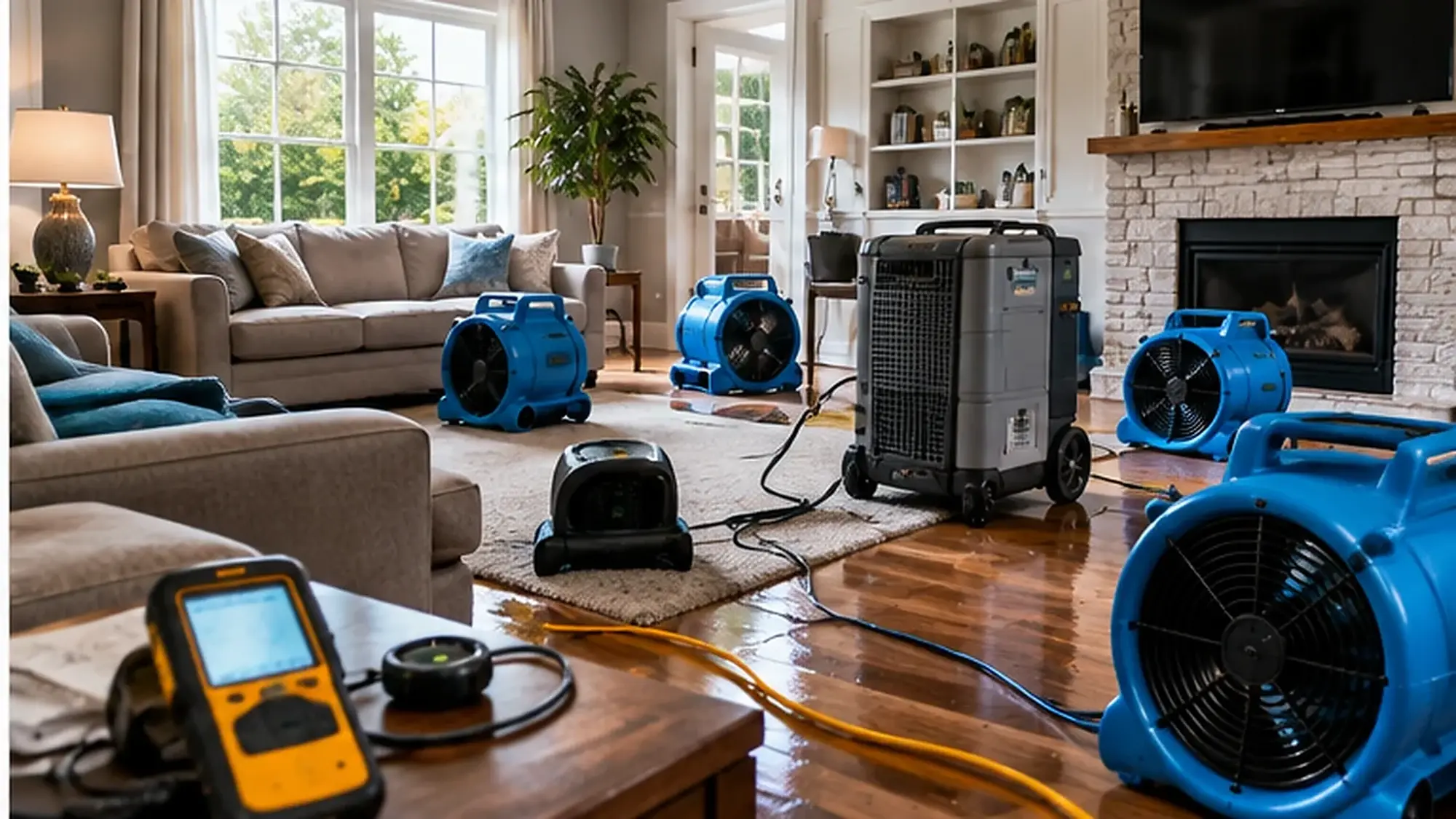
Flooded Carpet Extraction in DeSoto TX: Save What Can Be Saved
Flooded carpet water extraction in DeSoto TX is a race run in the first day. Carpet itself tolerates clean water better than its pad does: the pad saturates, holds water against the subfloor and breaks down, while the carpet above it can often be extracted, including weighted extraction that pulls water through the carpet from the pad, and dried in place. The decisions that matter, save the carpet, replace the pad, dry or lift the floor, come from moisture readings at the subfloor and a check of the carpet backing, not from how the surface feels underfoot.
Carpet work is one part of water damage restoration desoto tx; the emergency response behind it is on the emergency water extraction desoto tx homepage.
Carpet, pad and subfloor are one system
The carpet surface is only the top layer. Pad and subfloor can retain substantial moisture, and the decision to clean or replace depends on water category, timing, contamination and material condition.
- Identify whether the water is clean, gray or potentially contaminated.
- Check pad and subfloor moisture, not only carpet fibers.
- Use controlled drying after extraction when salvage is reasonable.
How the water-loss problem develops
Wet carpet can look surface-dry while the pad and subfloor remain saturated. Extraction decisions depend on water category and timing.
The visible symptom is only one part of the assessment. Water can move laterally along floors, travel under finish materials, wick into trim and drywall, or collect in cabinets and cavities. The correct next step depends on the source, the type of water, how long materials have been wet and whether the affected assembly can be dried safely.
What a thorough response should include
- Source and safety assessment: identify whether water is still entering and whether electrical, structural or contamination hazards are present.
- Moisture mapping: check the materials that could have absorbed water, not only the obvious puddle or stain.
- Extraction: remove standing or recoverable liquid water before deeper drying.
- Controlled drying: use airflow and dehumidification appropriate to the materials and environment.
- Progress verification: compare follow-up readings to an appropriate unaffected baseline or other defensible drying target.
- Cleaning and material decisions: separate cleanable materials from materials that are contaminated, swollen, delaminated or otherwise unlikely to recover.
Why the surrounding materials matter
Water damage is rarely confined to the material that first gets attention. Carpet may sit over pad and subfloor. A ceiling stain may connect to insulation or framing above. A kitchen leak can reach toe-kicks and cabinets. A crawl-space leak can affect joists and underside flooring. Looking at the full moisture path helps avoid both unnecessary demolition and incomplete drying.
What to do before help arrives
- Control or isolate the source when safe and practical.
- Keep people away from standing water around energized electrical equipment.
- Move portable valuables only when doing so will not create a safety or damage risk.
- Photograph the source, affected rooms, visible materials and damaged contents.
- Write down when the incident was discovered and what actions were taken.
- Do not use household fans around contaminated water or electrical hazards.
Insurance documentation
Coverage depends on the policy and cause of loss. Good documentation can still make the conversation easier: photos, a simple timeline, affected rooms, damaged contents, source-repair records and moisture/drying information when available. Do not promise coverage or payment; the carrier decides what the policy covers.
Can Wet Carpet Be Saved? The Honest Tests
Four tests decide it. First, the water category: clean supply water gives carpet a chance, contaminated water usually ends the discussion. Second, time: carpet wet beyond 48 hours in warm conditions is fighting odor and backing failure. Third, the delamination check: if the backing separates from the carpet face when lifted, the carpet is done regardless of how it looks. Fourth, the pad: pad almost always comes out, and removing it is not a failure, it is the cheap half of the assembly doing its job. When the tests pass, the carpet is extracted, treated, dried against readings and rechecked before furniture returns.
Frequently asked questions
Can flooded carpet be saved after water damage?
Often, yes, when the water was clean, extraction starts quickly and the carpet has not begun to delaminate. The tests that decide it are how long the carpet stayed wet, whether the backing separates when lifted, the condition of the pad underneath, and whether odor or staining is already set in. Contaminated water changes the answer toward removal.
How long can carpet stay wet before it is ruined?
Carpet itself can survive longer than carpet pad, but the safe working window is short: clean water extracted and drying started within 24 to 48 hours gives carpet its best chance. Beyond that, pad breaks down, backing adhesive weakens and odor sets in, especially in warm Dallas County conditions. The readings at the subfloor decide more than the surface feel.
Does carpet pad always have to be replaced after flooding?
Usually, yes. Carpet pad is inexpensive material that holds water like a sponge, dries slowly and loses its cushion permanently once saturated. Removing pad while saving the carpet above it is a common and honest scope. The exceptions are small, clean, very brief wettings caught within hours, where readings confirm the pad never fully saturated in the first place.
How is carpet dried after water extraction?
After extraction, including weighted extraction that pulls water from the pad, air movers float the carpet or move air across it while dehumidifiers pull moisture from the room. Tack strips and seams are checked, furniture is blocked off the damp surface, and subfloor readings are taken until the assembly returns to its dry standard, not until the carpet feels dry.
Will insurance cover carpet replacement after water damage?
Insurers commonly cover carpet damaged by a sudden, accidental water loss, and the decision between drying and replacement follows documented evidence: water category, time wet, delamination tests and moisture readings. That documentation is created during mitigation, which is one reason to start quickly and keep records. Slow leaks and long neglected wetting are where carpet claims usually run into trouble.
Who can extract water from flooded carpet near me?
This DeSoto service extracts water from carpet and pad in homes across the city and nearby areas, then dries the subfloor underneath. Whether carpet can be saved depends on the water category and how long it stayed wet, and that call is made honestly after inspection, not promised in advance.
Use these primary sources for safety, moisture control, flood information and restoration-standard context.
Carpet, pad and subfloor checks
Carpet, pad and subfloor checks should be based on the actual water path, material type and duration of exposure. A useful assessment does not assume every item is damaged; it checks the places that could reasonably have been reached and then uses condition and moisture information to decide what happens next.
- carpet face and backing
- padding thickness and condition
- tack strips
- subfloor moisture
- baseboards at the carpet edge
- nearby closets and furniture bottoms
What the homeowner can do before the assessment
Move safely recoverable belongings away from the wet area, keep notes about when the problem started, and photograph the condition. Avoid unsafe electrical areas and do not create additional spread by aggressively moving contaminated water through an occupied space. When the source is a plumbing, roofing or appliance problem, coordinate source repair with the mitigation work so that drying is not undermined by continuing water entry.
It is also helpful to separate facts from assumptions. A ceiling stain does not automatically prove a roof failure; a wet carpet does not automatically mean every square foot needs replacement; and an odor does not prove mold without understanding the moisture history. The best next step is to identify what is known, what is suspected and what still needs to be checked.
What a good closeout looks like
By the end of mitigation, the homeowner should understand what happened, what areas were affected, which materials were cleaned, dried or removed, and what documentation was retained. For larger losses, a handoff package can make the transition to reconstruction easier because the next contractor can see the known moisture history rather than starting from scratch.
Service-specific restoration considerations
Carpet restoration should consider the full floor assembly. Extraction at the surface may remove a large portion of the visible water, while pad and subfloor conditions determine what remains. A useful evaluation also checks furniture legs, tack strips, room edges and any transition where water could have migrated beyond the obvious wet area.
For property owners, the practical benefit of a detailed assessment is clarity. It helps distinguish the source repair from the mitigation work, identifies the materials that may need attention, and provides a record that can be used when discussing the loss with an adjuster or reconstruction contractor. If the source continues, the mitigation plan may need to be paused or revised; if readings remain elevated, drying may need to continue even when the room looks normal.