
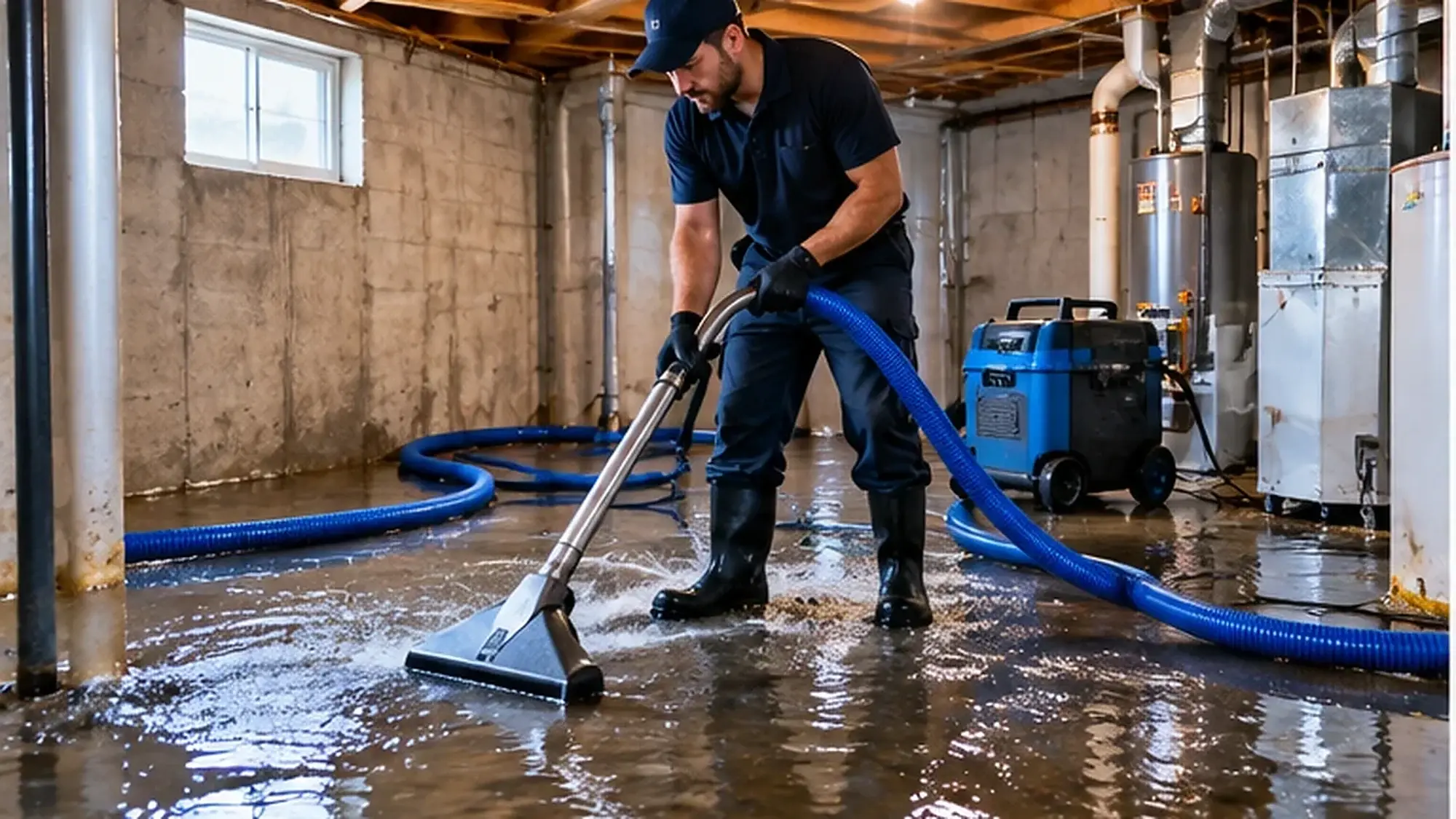
Structural drying is the measured removal of moisture from building materials and indoor air after water extraction. It relies on moisture assessment, controlled airflow, dehumidification and repeat readings rather than a fixed number of fan-hours.
For local water-loss help in DeSoto, see Emergency Water Extraction in DeSoto TX.
Why structural drying is different from water removal
Water removal handles liquid that can be extracted. Drying starts after that and targets moisture held in drywall, subflooring, wood, cabinets, insulation and the surrounding air. A room can look better while the assembly is still wet.
The drying plan starts with a baseline
Readings from affected materials are more useful when compared with unaffected material of the same type in the same property. The baseline helps determine what “dry enough” should mean for the specific assembly.
Airflow and dehumidification work together
Air movement encourages evaporation at the material surface. Dehumidification removes moisture from the indoor air so evaporation can continue. Equipment placement should respond to room layout, material type and changing conditions.
Different materials need different treatment
Drywall, carpet pad, hardwood, subfloor, framing and cabinetry release moisture at different rates. That is why one fan placement or one drying schedule does not fit every room.
Why repeat readings matter
Drying is a process, not a single event. Readings can show when one area is improving faster than another and whether equipment should remain, move or be removed.
When material removal becomes necessary
Some wet materials can be dried in place. Others may be too contaminated, swollen, delaminated or structurally compromised. Removal should follow the source, water category and material condition.
How to verify the endpoint
A strong drying record identifies what was affected, what was measured and how conditions changed. The property should not be declared dry solely because the surface feels comfortable.