
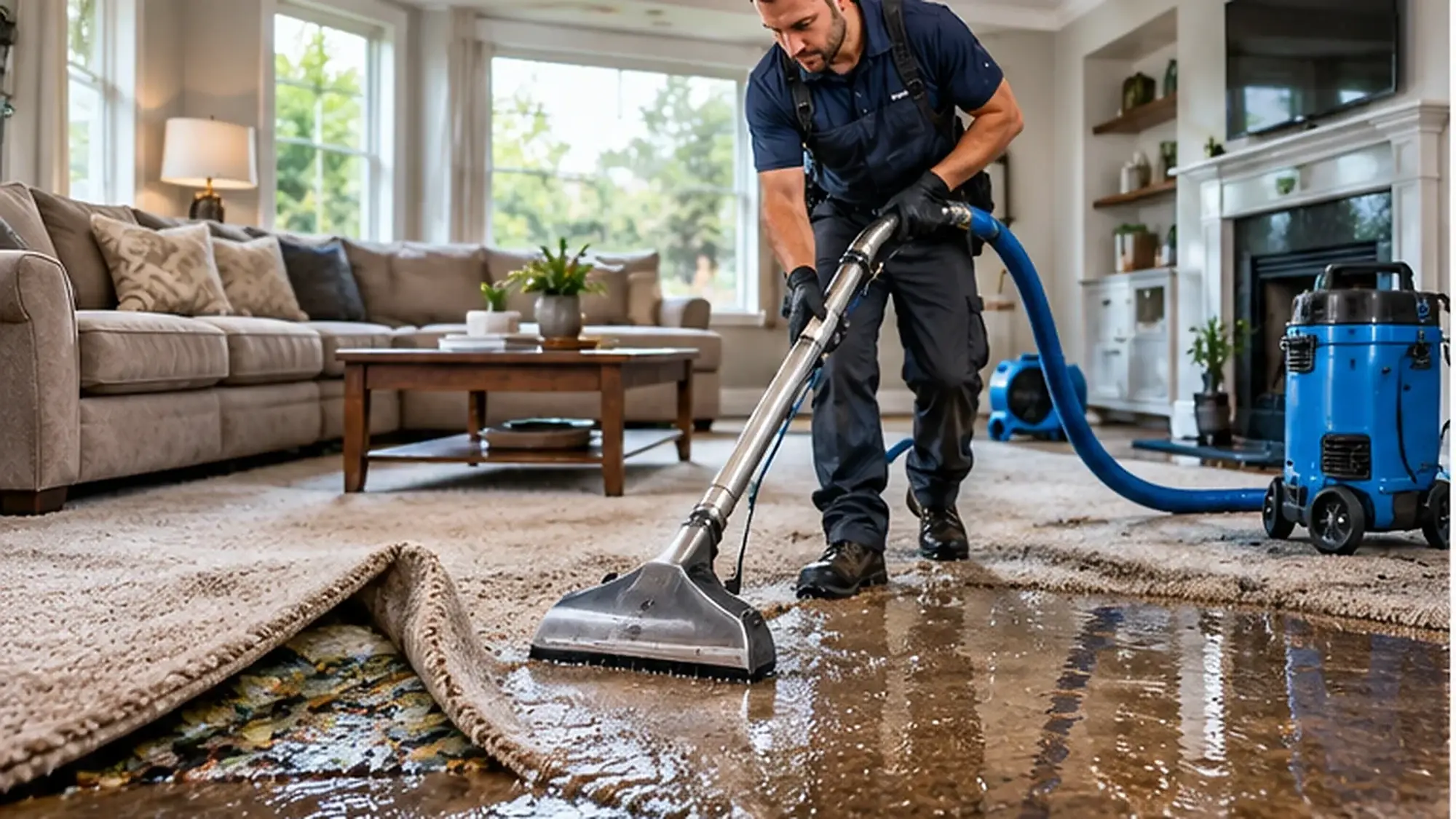
Standing water keeps materials wet and gives water more time to move into carpets, wood products, drywall and contents. Prompt extraction reduces the amount of liquid that can migrate, but the right timing depends on the source, water category, affected materials and whether the area is electrically or structurally safe to enter....
For local water-loss help in DeSoto, see Emergency Water Extraction in DeSoto TX.
The practical answer is: as soon as it is safe
Standing water keeps materials wet and gives water more time to move into carpets, wood products, drywall and contents. Prompt extraction reduces the amount of liquid that can migrate, but the right timing depends on the source, water category, affected materials and whether the area is electrically or structurally safe to enter.
Why a puddle is only one part of the loss
A floor can stop shining while moisture remains underneath. Carpet pad, subfloor seams, cabinet bases and wall cavities can hold water after visible pooling disappears. This is why extraction and drying are related but not identical tasks.
What changes the urgency
Large volumes, active leaks, contaminated water, porous materials, occupied buildings and water near electrical systems all increase the need for a controlled response. A small isolated spill may be manageable at home; a spreading loss or wet structural assembly deserves a more deliberate assessment.
What extraction actually accomplishes
Extraction removes recoverable liquid water. addresses the broader response, while handles moisture remaining in building materials. Extraction equipment, pumps and vacuums should be selected according to the amount and accessibility of the water.
Why drying does not have a fixed clock
Once the bulk water is removed, evaporation depends on material, temperature, humidity and airflow. A wet wood assembly can respond differently from carpet or drywall. That means a drying plan should use measurements and condition changes rather than a blanket promise that every property will be dry after the same number of hours.
When standing water should not be entered
Do not enter water that may be electrically energized, contaminated or structurally unsafe. Children and pets should stay away from unknown water. Severe-weather flooding should be handled according to official emergency guidance first.
What to document
Record when the water was discovered, the source if known, rooms affected, visible contents and steps taken to reduce further damage. Photos before major cleanup can be useful. Keep receipts and mitigation records in one place.
Bottom line
Faster safe extraction generally gives the property a better starting point for drying, but speed is not the only variable. The quality of the response comes from controlling the source, removing recoverable water, finding hidden moisture and verifying conditions as they improve.
Volume, material and exposure change the response
A shallow puddle on nonporous tile is not the same event as several inches of water on carpet, wood or drywall. Water near electrical equipment creates a separate hazard. The right timing therefore starts with safety and source control, then considers how much liquid is present and what materials are being exposed.
In a commercial building, standing water can also affect operations before it causes visible material damage. In a home, the same water may move into cabinets, closets or adjacent rooms. Context matters.
What happens after the water is gone
The room may look dramatically better after extraction while the drying work is just beginning. Moisture can remain in carpet pad, subfloor, wall bases, cabinetry and framing. That is why extraction should be followed by moisture checks and controlled drying where the assembly requires it.
A strong response is measurable. Instead of relying on a timer, compare readings over time and adjust the drying plan as the materials improve.
Why the first hours matter
Water continues to spread and soak materials while it remains present. Carpets can hold water in padding, wood products can begin to swell, and drywall can wick upward from a wet floor edge. Prompt safe extraction does not guarantee a perfect outcome, but it reduces the amount of liquid available to continue spreading.
Timing after extraction
Removing standing water is not the same as reaching a dry condition. After extraction, the drying plan has to deal with material moisture and indoor humidity. Measurements help show whether the response is progressing and whether a slow-drying assembly still needs equipment.
What a homeowner can do while waiting for help
If the property is safe to enter, keep people away from the wet area, stop the source when practical and move unaffected belongings out of the water path. Do not operate electrical equipment that may have been exposed to water. For a small clean spill on a safe surface, ordinary extraction methods may be enough. For spreading water, wet building materials or uncertain contamination, the safest next step is a property-specific assessment rather than more aggressive DIY cleanup.
Why “looks dry” is not a stopping point
Standing water can disappear from view quickly while absorbed moisture remains in the materials around it. Carpet pad can hold water below the carpet face, wood can keep changing after the surface is cleaned, and drywall can remain wet behind paint. This is why a practical response has two checkpoints: first, remove recoverable liquid; second, verify the materials and indoor conditions as they dry. The second checkpoint is where many small-looking losses either finish cleanly or reveal a hidden problem that still needs attention.
Common questions
How quickly should standing water be removed?
As soon as it is safe and practical, especially when porous materials or structural assemblies are affected.
Is extraction the same as drying?
No. Extraction removes liquid water; drying addresses moisture remaining in materials and air.
Does every property dry in the same time?
No. Material, humidity, temperature, water volume and response timing all affect the drying process.
Call +1 972-945-2324 and describe the source, affected area and water type for next-step guidance.
Call +1 972-945-2324