
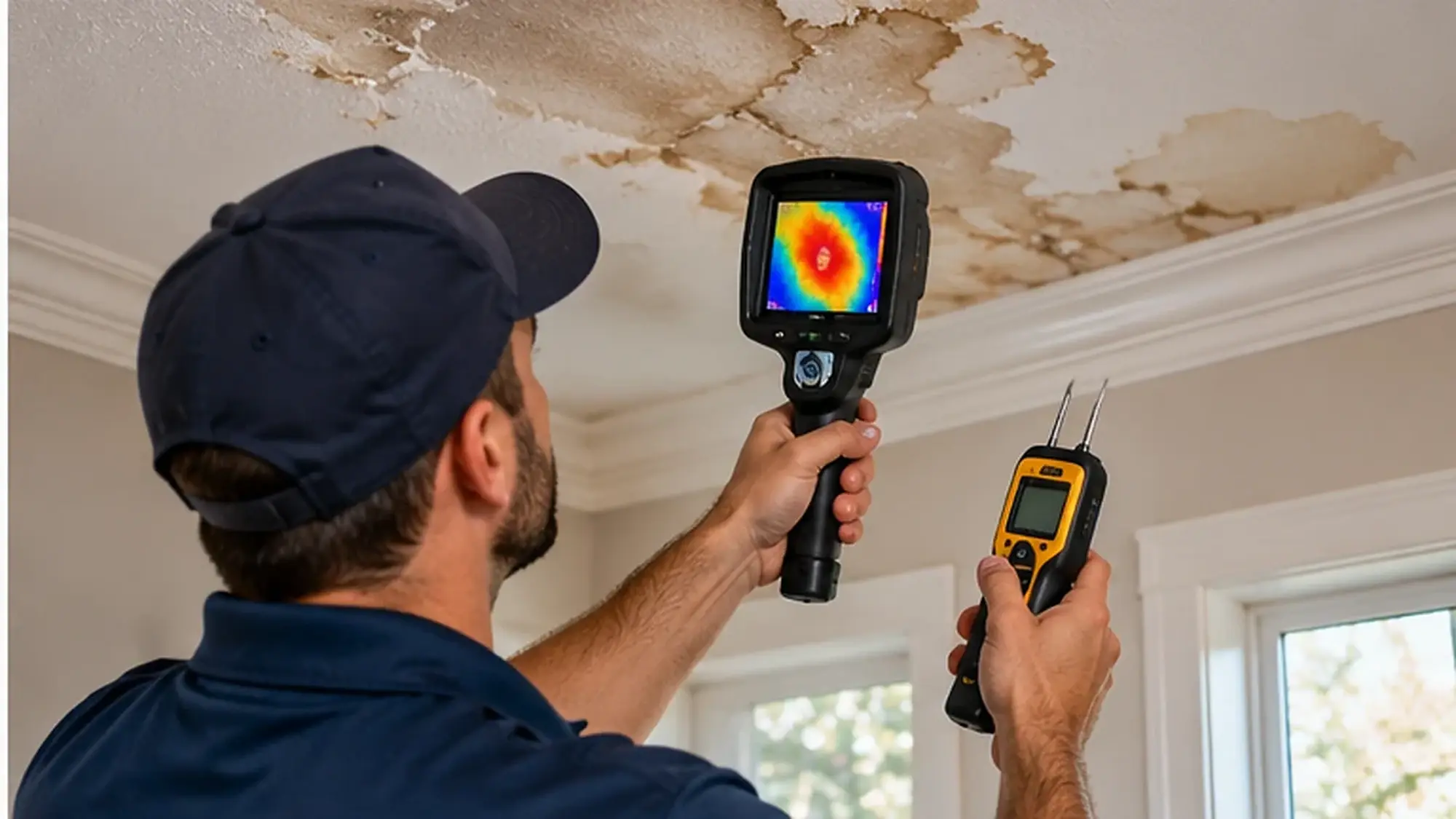
A ceiling stain can show where moisture became visible, not where the leak started or how far it traveled. Roof penetrations, plumbing lines, bathroom fixtures and HVAC condensate can all produce overhead water damage. Before repairing the finish, the source needs to be understood and controlled....
For local water-loss help in DeSoto, see Emergency Water Extraction in DeSoto TX.
A ceiling stain is a signal, not a complete diagnosis
A ceiling stain can show where moisture became visible, not where the leak started or how far it traveled. Roof penetrations, plumbing lines, bathroom fixtures and HVAC condensate can all produce overhead water damage. Before repairing the finish, the source needs to be understood and controlled.
Once the source is controlled, the next question is the wet assembly. Ceiling drywall, insulation, joists and adjacent wall cavities can hold moisture beyond the visible stain. That makes a surface-only repair risky if the surrounding structure has not been inspected.
How moisture moves above a ceiling
Water follows gravity, but it can also spread along framing, insulation and the back side of drywall. A small opening may allow water to travel several feet before it finally creates a visible spot. The first ceiling stain may therefore be downstream of the source.
What homeowners can look for safely
Watch for fresh staining, soft or sagging drywall, peeling paint, musty odor, damaged insulation, or changes in adjacent wall finishes. Do not push on a swollen ceiling or climb into an unsafe cavity just to inspect it. If the ceiling appears unstable, leave the area and obtain qualified help.
Why moisture mapping is more useful than appearance
A ceiling can feel dry while the back side remains wet. Moisture meters can help identify elevated readings in accessible materials, and thermal imaging may help narrow where temperature patterns differ. The purpose is not to produce a dramatic image; it is to decide where further inspection or drying is warranted.
For the restoration stage, addresses the loss-specific response, while addresses retained moisture in the surrounding assembly.
Insulation and framing behave differently
Some insulation types do not respond well to prolonged saturation, especially when they compress or lose their intended performance. Wood framing can often be dried in place when conditions are appropriate, but it still needs measurement. The right decision depends on water category, saturation and material condition rather than a universal rule to remove everything.
When the source is a roof leak
A roof leak can be intermittent and difficult to diagnose from a single wet day. Wind-driven rain, failed flashing and damaged penetrations can let water enter at one location and appear inside at another. Temporary source control can prevent additional water from entering while permanent roof repair is arranged, but interior drying still has to account for the moisture that already entered the building.
Insurance documentation for ceiling damage
Photograph the stain, surrounding ceiling, source area when visible, insulation or contents that were affected, and any repair documentation. Record when the leak was found and whether the source was active. These records help organize the loss, but insurance coverage depends on the policy and the cause of the event.
The key DeSoto homeowner takeaway
Do not treat a ceiling stain as a paint problem. Treat it as evidence of water movement that needs source control, assembly inspection and, where necessary, measured drying. Once the moisture question is resolved, the cosmetic repair becomes much easier to plan.
Ceiling fixtures and nearby assemblies need attention
Water near recessed lights, ceiling fans or other electrical fixtures deserves extra caution. Do not operate wet electrical equipment just to test whether it still works. Water can also travel from a ceiling into the top plates of walls, so the inspection may need to extend beyond the original stain.
Insulation can complicate drying because it may hide moisture above the ceiling. The correct response depends on the insulation type, how wet it became and whether it can be safely dried in place.
Why repainting too early can hide the real issue
A fresh coat of paint can make a stain disappear while moisture remains behind the finish. That can delay recognition of an ongoing leak or trapped moisture. The better sequence is source control, moisture assessment, drying or removal as needed, then cosmetic repair.
For a roof-source event, coordinate source repair with the interior drying plan. The inside cannot finish drying reliably if new water continues to enter from above.
Ceiling leaks from plumbing versus roofing
A bathroom supply line or drain can release water even when the roof is intact. Conversely, storm water can enter through flashing or a roof penetration and travel before it reaches the interior. The visible stain is therefore not enough to identify the source. Ask what was happening when the staining appeared, whether the area changes after rain, and whether plumbing fixtures are nearby.
What a drying record should show
For a ceiling loss, useful records include the affected rooms, source observations, material readings, equipment placement and follow-up readings. The record should make it possible to explain why a section was dried, why another section was opened, and how the endpoint was determined. That is more useful than a single photograph showing the stain after it was painted.
Common questions
Why is a ceiling stain not enough to identify the source?
Water can travel along framing and other assemblies before appearing at the visible stain.
Can drywall look dry while the back is wet?
Yes. Surface appearance does not reliably show the moisture condition of the assembly.
What should I do if the ceiling looks unstable?
Keep people away from the area and obtain appropriate professional or emergency guidance.
Call +1 972-945-2324 and describe the source, affected area and water type for next-step guidance.
Call +1 972-945-2324