
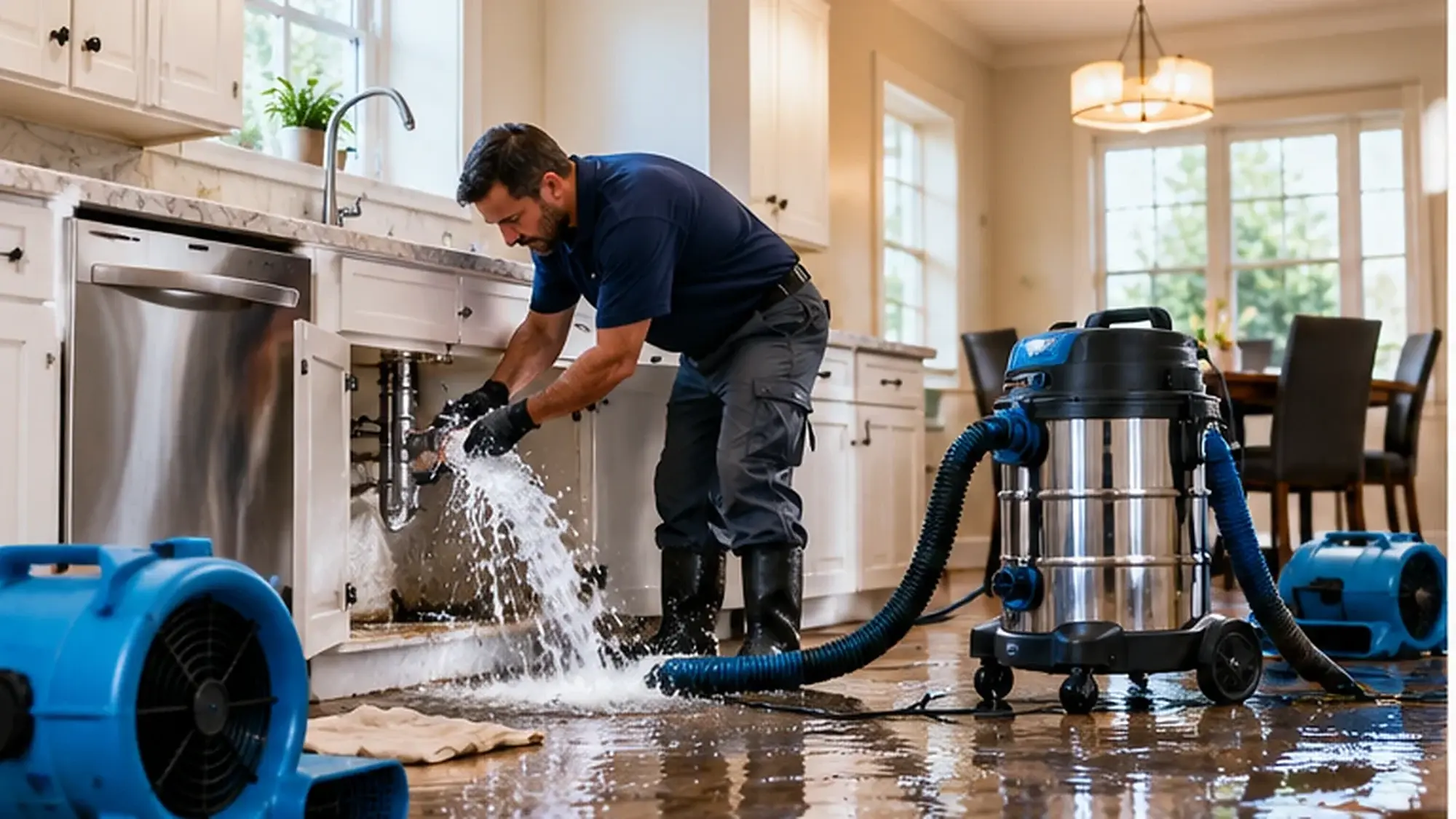
Water can move inside wall cavities before a stain reaches the painted surface. That makes a discolored wall an endpoint, not necessarily the source. The same is true for baseboards, cabinets and flooring transitions: the visible material may show only part of the moisture path....
For local water-loss help in DeSoto, see Emergency Water Extraction in DeSoto TX.
Signs of Water Damage in Walls You Can See, Smell and Feel
Water damage behind walls rarely announces itself where it starts. By the time a stain blooms through paint, hidden water damage behind walls may have been soaking drywall, insulation and studs for weeks. The signs of water damage in walls are usually small at first: a musty odor that will not clear, peeling paint, or warped drywall at the baseboard line. Confirming them takes more than a look. A moisture meter reads the material itself, while thermal imaging helps an inspector choose where to measure. This guide walks through the clues, the likely sources in DeSoto homes, and the point where a wall can still be dried in place instead of opened. Visible stains are often the last clue, not the first.
- An expanding stain or discoloration that returns after cleaning
- Bubbling, cracking or peeling paint on an interior wall
- A musty odor that strengthens after rain or plumbing use
- Warped, swollen or separating baseboards
- Drywall that feels soft, spongy or cool in one patch
- Flooring that buckles, cups or feels springy at the wall line
Common clues around walls
Watch for paint bubbling, swollen baseboards, new staining, changes in texture, musty odor, or flooring that has changed shape near a wall. Doors can also behave differently when humidity or adjacent materials change. None of these signs proves hidden damage by itself, but several together can justify a closer look.
Where moisture commonly travels
Leaks at supply lines, appliances, bathrooms and roofs can feed wall cavities through small openings. Water may travel along studs, insulation or electrical/plumbing penetrations and emerge in another room. Cabinets can hide water behind toe-kicks while carpet or flooring covers the lower edge of the wall.
Inspection should follow the most likely water path
A practical inspection starts with the source, then follows likely routes through floors, walls and ceilings. Moisture meters can compare affected materials with nearby unaffected materials of the same type. Thermal imaging can sometimes help identify patterns worth inspecting further, but a thermal image alone does not prove wetness.
When the affected area needs a broader response, can address wall cavities, subfloors and framing after the source and water path are understood.
Why hidden moisture matters
Moisture that remains in a wall or under flooring can contribute to swelling, odor and conditions that support microbial growth. The goal is not to tear open every wall. The goal is to identify where moisture likely reached and use measurements and material condition to decide what needs to happen.
When homeowners should stop investigating themselves
If water is near electrical components, if the source is contaminated, if a ceiling or wall assembly appears unstable, or if the area is inaccessible without opening the structure, do not create another hazard to satisfy curiosity. A documented assessment can be safer than improvising access.
A useful record for later repairs
Keep photos of the original signs, the suspected source and any accessible moisture readings. If materials are opened, photograph the assembly before removal or drying. That record helps connect the visible symptom to the work that followed.
DeSoto takeaway
Hidden water damage is best handled as a path-and-material problem. Start with where the water came from, trace where it could have gone, and verify moisture in the materials that matter. A dry-looking wall is reassuring; a measured dry wall is more useful.
Baseboards, cabinets and closets are useful clues
A swollen baseboard, a cabinet toe-kick that has changed shape or a musty closet corner can reveal a water path that is not obvious in the middle of the room. These clues are especially useful after appliance leaks or plumbing failures because cabinets can hide water at the floor edge.
Closets also deserve attention because they can stay closed while the rest of the room dries, slowing air exchange. If a closet shares a wall with the suspected source, include it in the inspection plan.
How to avoid unnecessary demolition
The goal of hidden-moisture inspection is not to open every wall. Start with the source and the probable route, then use available visual and moisture evidence to narrow the area. When an assembly can be safely accessed with a targeted opening, that may be preferable to broad demolition.
A measured approach can also make later repairs more efficient because the contractor knows which sections were actually affected rather than replacing an entire wall or floor by default.
Common sources of hidden wall moisture
Supply lines, refrigerator lines, washing machines, bathroom plumbing, roof leaks and exterior water entry can all put moisture inside a wall. The route can vary with the construction and opening through which the water entered. That is why a good inspection traces the source instead of assuming the closest stain is the cause.
Signs that deserve a closer look
A new musty odor after a leak, paint bubbling, a baseboard that no longer sits flat, or flooring that changes near a wall are useful clues. One clue by itself may be minor; several together can justify moisture measurement. The objective is to find the area that needs attention while avoiding unnecessary demolition elsewhere.
How hidden moisture affects the rest of a room
Moisture inside a wall can influence adjacent flooring, baseboards and cabinets even when the visible wall mark is small. The same leak can also raise humidity in a closed closet or room. Tracking the probable water path helps separate connected effects from unrelated defects. This is why a strong inspection does not simply circle a stain; it considers the source, the adjacent assemblies and the materials that could have been reached.
Where Hidden Wall Moisture Starts in DeSoto Homes
Most hidden wall moisture in DeSoto traces back to a short list of local causes. Slab foundation homes carry supply lines under or beside the slab, and a slow leak can wick into wall bases and flooring long before water shows on a surface. Expansive clay soil swells when wet and shrinks in dry spells, and that movement stresses pipes and joints season after season. Air conditioning condensate lines clog during long Texas summers, overflowing into wall cavities and closets. And storm driven rain finds roof lines, flashing and window frames, entering once and drying so slowly inside the cavity that the stain appears weeks later.
The pattern matters because the fix follows the source. A wall dried without stopping a slab leak gets wet again, and a cavity that stayed damp becomes the subject of our mold remediation page: mold behind drywall is the usual end of an untreated hidden leak.
How to Tell If There Is Water Damage Behind Walls: A Step by Step Check
- Observe and record: photograph stains, baseboards and flooring, and date the photos so change over time is visible.
- Compare timing: note whether odor or staining worsens after plumbing use, after laundry or showers, or only after rain. Timing separates plumbing sources from roof and storm sources.
- Touch checks: press drywall gently for soft spots, look for baseboard gaps and check whether the floor feels different within a foot of the wall.
- Check the other side: the room, closet or cabinet sharing the wall often shows the clearer clue.
- Stop and verify: when two or more signs line up, the next step is moisture meter verification and, where needed, water damage restoration assessment, not guesswork demolition.
Common questions
How can you tell if there is water damage behind walls?
Look for expanding stains, bubbling paint, musty odor that strengthens after rain or plumbing use, warped baseboards, soft drywall and floors that feel spongy near the wall. Track when each sign changes, photograph it, and note nearby pipes, appliances and exterior walls. A pattern over days usually reveals the likely water path.
Can water damage behind walls be fixed without tearing out drywall?
Sometimes, yes. If readings show low moisture, the water was clean and drying equipment can reach the cavity through baseboard removal or small access points, walls may dry in place. Saturated insulation, category 3 water, long hidden leaks or visible mold usually require opening the wall so damaged material can be removed safely.
How long does it take mold to settle in after water damage behind a wall?
On wet drywall and wood inside a closed wall cavity, mold growth can start within 24 to 48 hours, especially in warm, humid Dallas County conditions. The cavity traps moisture and slows drying, so a wall that feels dry on the painted surface can still support growth inside long before any odor escapes.
What is considered minor water damage?
Minor water damage usually means a small, clean water spill caught quickly, dried within a day, and limited to surfaces that clean and dry fully without swelling, staining or odor. Damage stops being minor when moisture reaches wall cavities, flooring layers or porous materials, or when drying takes longer than 48 hours.
Does a thermal image prove a wall is wet?
No. A thermal camera shows surface temperature differences, which can point to evaporative cooling from moisture, but insulation gaps, air leaks and cold pipes can look similar. It is a screening tool that tells an inspector where to check. Confirmation always comes from moisture meter readings taken in the material itself afterward.
Will homeowners insurance cover hidden water damage behind walls?
Many Texas policies cover hidden damage from a sudden, accidental leak, such as a burst supply line, while excluding damage from slow leaks left unaddressed over months. The distinction usually turns on documentation: when the leak started, photos, moisture readings and repair records. Report the loss early and keep records before opening walls.
Should homeowners open walls themselves?
It is safer not to. Opening a wall can expose live wiring, spread contaminated dust and spores into clean rooms, and disturb materials that may need containment. If you suspect damage, photograph the signs, stop the water source if it is safe, and get moisture readings first; a small, planned opening beats a large unplanned one.
Call +1 972-945-2324 and describe the source, affected area and water type for next-step guidance.
Call +1 972-945-2324