
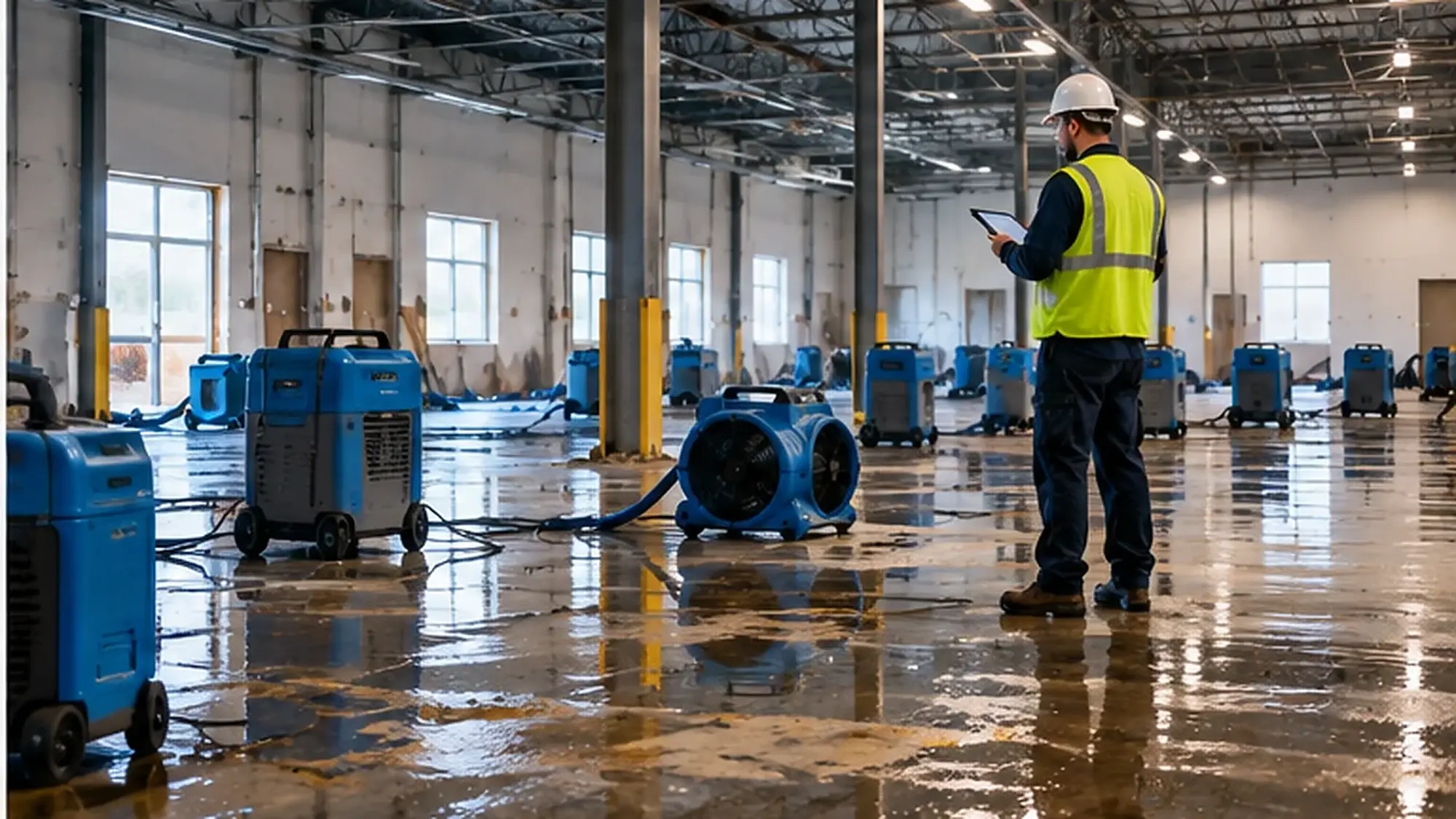
Commercial water damage creates a different decision environment from a residential loss because the property may need to keep operating. The first priority is protecting people and controlling the water source. The second is identifying which functions are affected: customer areas, offices, restrooms, inventory zones, electrical spaces or equipment rooms....
For local water-loss help in DeSoto, see Emergency Water Extraction in DeSoto TX.
The first goal is controlled continuity
Commercial water damage creates a different decision environment from a residential loss because the property may need to keep operating. The first priority is protecting people and controlling the water source. The second is identifying which functions are affected: customer areas, offices, restrooms, inventory zones, electrical spaces or equipment rooms.
Instead of treating the whole building as one wet area, separate the property into affected, potentially affected and unaffected zones. That makes it easier to protect stock, reroute staff and focus drying resources where they are needed most.
Document the loss before conditions change
Take wide photographs of each affected room, then closer photos of flooring, walls, equipment and contents. Note when the loss was discovered, where the water originated and which operations were interrupted. Keep a simple incident timeline and save invoices, estimates and mitigation records as the response develops.
Extraction should follow the actual footprint
Standing water can spread under carpet tiles, across slabs and around partitions. In warehouses or offices, a visible puddle may represent only one section of a larger migration path. Extraction should be paired with moisture assessment so the drying plan includes materials that absorbed water but no longer show surface liquid.
For direct service needs, see and .
Protect equipment and business-critical contents
Move unaffected inventory and portable equipment away from wet zones when safe. Electronics and sensitive materials may need specialized handling. Wet cardboard, stored documents and packaging can fail quickly and should not be stacked against damp walls. A clear separation between salvageable and affected contents helps prevent secondary damage.
Why drying documentation matters for businesses
Commercial properties often need a record that shows what was affected, where equipment was deployed and how conditions changed. Moisture readings taken over time can support decisions about when equipment can be removed and whether specific rooms can return to normal use. This is different from simply running fans until the floor feels dry.
Sanitation and water category
A clean plumbing leak, a sewer backup and outdoor floodwater should not be treated as the same loss. Water category affects the protective measures, cleaning methods and material decisions required. When the source is uncertain, isolate the area and get the source evaluated before reopening it to normal use.
The first 24 hours are about reducing uncertainty
A strong commercial response turns a large, confusing event into a sequence: source control, safety, affected-area mapping, extraction, drying, documentation and recovery planning. The business owner does not need every answer immediately; the useful goal is to know what is known, what is still uncertain and what must happen next.
Prioritize rooms by business impact
Not every wet area creates the same operational consequence. A flooded reception area, server closet, inventory aisle and employee restroom may require different priorities. A simple triage can separate spaces that must be isolated immediately from areas that can remain open while drying work occurs elsewhere.
Where possible, move staff routes away from wet flooring and place affected inventory on a clean, dry staging surface. Protecting unaffected stock can prevent the original water loss from becoming a much larger inventory loss.
Communicating with employees and vendors
A clear internal message can reduce confusion: identify which areas are closed, where people should enter, who is coordinating repairs and how questions should be routed. For larger losses, keep a central timeline so the business owner can track the restoration, plumbing, roofing and insurance pieces without mixing responsibilities.
The restoration objective is not only to dry materials. It is also to reduce uncertainty for the business while the property returns to normal operations.
A simple business-continuity triage
Separate life-safety issues from operational issues. A wet electrical room or unstable ceiling is a safety priority. A damp carpet tile zone may be an operational problem that can sometimes be isolated while the rest of the business continues. Inventory, customer access and employee routes should be considered separately rather than treating every square foot as equally urgent.
Why commercial records need more detail
Businesses may have multiple decision-makers, vendors and insurance contacts. A concise log of when areas were closed, what equipment was protected, what was moved and when drying milestones were reached can reduce confusion. Photos should include enough surrounding context to identify the room or area later.
A practical 24-hour operating plan
During the first part of the response, protect people and stop active water. Next, identify the smallest safe area that must be isolated and the property functions that must remain available. Then move unaffected contents, begin extraction and document the footprint. As drying starts, record which rooms, materials and business functions are affected. By the end of the first day, the business owner should have a clearer picture of what is wet, what is protected, what source work remains and what the next drying or repair checkpoint will be.
Common questions
What should a business do first?
Protect people, control the source when safe, separate affected areas and document the loss.
Why is documentation important for a commercial loss?
It helps track affected areas, contents, downtime and mitigation decisions.
Can a business stay open during water damage?
Sometimes, but only where safety and operational conditions allow; affected areas may need isolation.
Call +1 972-945-2324 and describe the source, affected area and water type for next-step guidance.
Call +1 972-945-2324