
Wet carpet is not automatically a replacement job. The decision depends on what water reached the carpet, how long it remained wet, whether the pad and subfloor were affected, and whether the material can be cleaned and dried safely. A small clean-water loss that is extracted quickly is very different from sewage, outdoor floodwater or a carpet that has stay...
For local water-loss help in DeSoto, see Emergency Water Extraction in DeSoto TX.
The answer depends on the water, the material and the timing
Wet carpet is not automatically a replacement job. The decision depends on what water reached the carpet, how long it remained wet, whether the pad and subfloor were affected, and whether the material can be cleaned and dried safely. A small clean-water loss that is extracted quickly is very different from sewage, outdoor floodwater or a carpet that has stayed saturated for an extended period.
Carpet also has multiple layers. The face fibers may look improved after extraction while the pad underneath remains saturated. Moisture can continue into the subfloor, making the visible carpet only one part of the problem. That is why a salvage decision should be based on the full assembly, not appearance alone.
Water category matters
Clean water from a supply line can have a different cleanup pathway from water that has mixed with wastewater or outdoor contaminants. The longer contaminated water remains, the more complicated the cleanup becomes. When the source is unknown, it is safer to stop treating the event as a simple spill until the source is understood.
Carpet pad and subfloor are often the deciding factors
The pad is a common hidden reservoir. Foam can absorb water and remain wet below a carpet that feels better on top. If the pad is heavily contaminated, saturated for too long or no longer holds its shape, replacement may be more appropriate than attempting to dry it in place. The subfloor below may also need moisture mapping, especially around seams, edges and transitions.
Where the carpet is potentially salvageable, can address water removal and pad-focused drying. If the loss reached the wider structure, can address the building materials around the carpeted room.
What homeowners should do immediately
Move people and pets away from unsafe water, stop the source when safe, and keep wet electrical equipment out of service. Do not grind heavy furniture across saturated carpet, because that can damage the carpet or spread moisture. Photograph the affected area before moving contents when practical, then identify adjacent rooms that may have received migrating water.
How extraction changes the outcome
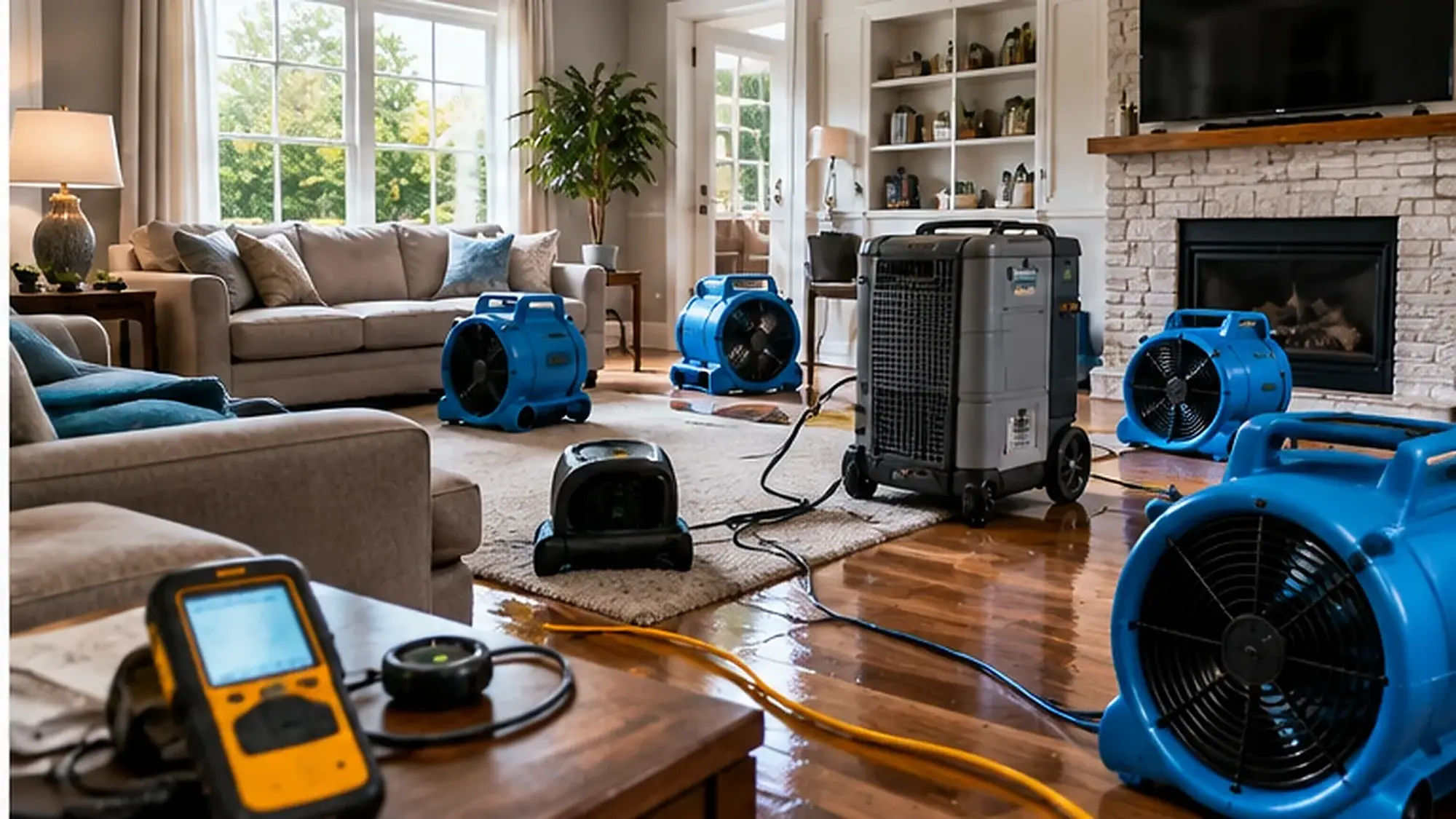
Extraction removes liquid water faster than passive evaporation. After the bulk water is removed, drying has to address the remaining moisture in fibers, pad, subfloor and indoor air. Air movers increase evaporation, while dehumidification removes moisture from the air so drying can continue. Equipment should be adjusted as conditions change rather than left on a fixed schedule.
Signs carpet should not be treated as a simple cleanup
Persistent odor, visible contamination, swelling at the floor edge, wet pad that does not respond to extraction, staining that continues to expand, or moisture readings above the unaffected baseline are reasons to reassess. These signs do not automatically mean every material needs replacement; they indicate that the assembly needs a more complete evaluation.
Insurance and contents documentation
Photograph damaged rugs, furniture legs, stored items and flooring transitions. Keep any invoices or moisture records from mitigation work. Coverage is policy-specific, so the useful role of documentation is to create a clear record that can be reviewed by the property owner and carrier.
A DeSoto homeowner takeaway
For a localized clean-water event, quick extraction and careful drying can improve the chance of salvage. For contaminated water, prolonged saturation or hidden subfloor moisture, the decision becomes more conservative. The key is to evaluate the entire carpet system instead of making the call from the top surface alone.
How to think about carpet, pad and subfloor as one system
Carpet can be cleaned at the surface while its pad remains saturated underneath. The pad can also trap water against the subfloor, which increases the importance of checking the flooring system below. In some homes, carpet transitions connect to hardwood or laminate, so water can move from one material to another even when only the carpet appears wet.
Furniture can complicate the picture. Water trapped under furniture feet may leave a ring or discoloration, while heavy furniture can compress wet carpet and pad. Moving unaffected contents to a dry staging area gives the carpet more room to dry and makes inspection easier.
When salvage and replacement are both possible
A good decision is not always all-or-nothing. One room may be salvageable while a separate section exposed to contaminated water is not. The useful approach is to document which materials were exposed to what water and evaluate each assembly on its own condition rather than applying the same outcome to the whole property.
Once the carpet is stable and dry, the final evaluation can be paired with cleaning or replacement planning. Cosmetic improvements should come after the moisture question is resolved, not before.
How water type changes carpet decisions
If the carpet was affected by a clean indoor plumbing loss, the evaluation can focus on extraction, pad condition and drying. Outdoor floodwater and wastewater introduce a different sanitation problem. In those cases the question is not simply whether the carpet can be made to look clean; the material has to be evaluated for whether it can be handled safely and appropriately.
A practical carpet salvage sequence
Document the carpet and nearby contents, remove standing water safely, assess the pad and subfloor, then establish a drying plan. As conditions improve, recheck moisture instead of assuming the first extraction visit finished the job. This sequence creates a clearer basis for deciding whether the material should stay, be cleaned or be replaced.
Common questions
Does wet carpet always need replacement?
No. Clean water, prompt extraction, material condition and the condition of the pad and subfloor all matter.
Why is the carpet pad important?
The pad can retain water below the surface and may have different salvage limits from the carpet face.
Does contaminated water change the decision?
Yes. Contamination can make some porous materials inappropriate to keep.
Call +1 972-945-2324 and describe the source, affected area and water type for next-step guidance.
Call +1 972-945-2324