
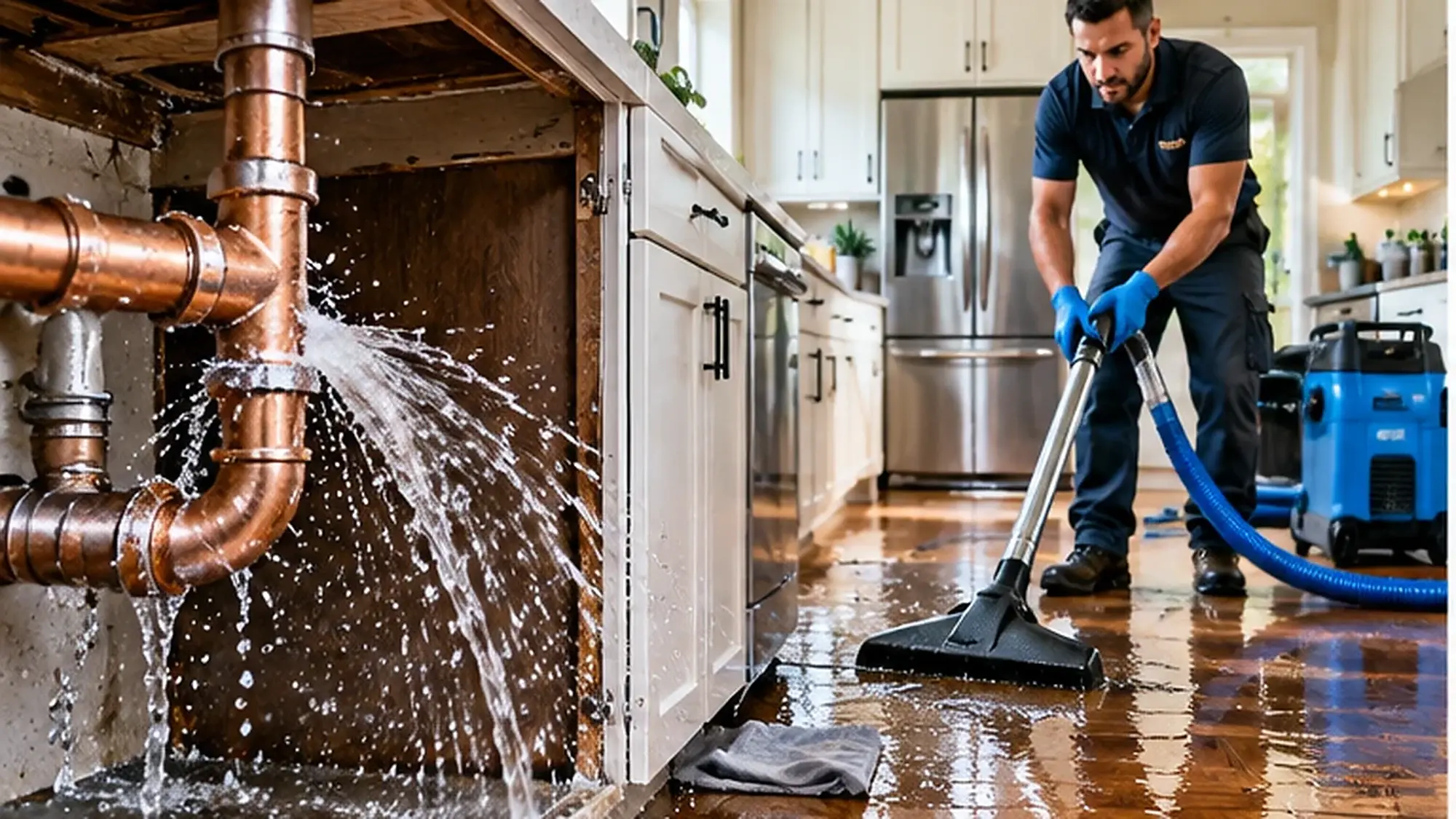
A burst pipe creates two separate problems: the water source must be controlled, and the water already inside the property must be managed. Stopping the active leak does not remove water that has reached flooring, cabinets, drywall, insulation or wall cavities. The safest first step is to shut off the water supply when you can do so without entering an unsaf...
For local water-loss help in DeSoto, see Emergency Water Extraction in DeSoto TX.
First priorities after the pipe breaks
A burst pipe creates two separate problems: the water source must be controlled, and the water already inside the property must be managed. Stopping the active leak does not remove water that has reached flooring, cabinets, drywall, insulation or wall cavities. The safest first step is to shut off the water supply when you can do so without entering an unsafe area. If electrical equipment or outlets are wet, stay clear and use qualified emergency guidance rather than testing the area yourself.
Once the source is controlled, identify where water visibly collected and where it could have traveled. In a home, a supply-line failure upstairs can move through floor penetrations, ceiling assemblies and wall cavities before the lower room shows staining. Photograph the affected rooms, the failed component and visible contents while conditions are still easy to document. That record is useful later when reviewing the loss with an insurer or contractor.
How far can burst-pipe water travel?
The puddle is rarely the full footprint. Water can migrate underneath carpet and pad, along the edge of floating floors, through cabinet toe-kicks and behind baseboards. It can also follow plumbing penetrations into adjacent walls or ceilings. A room that appears mostly dry may still contain elevated moisture in subflooring, drywall or framing.
That is why a burst pipe assessment should follow the water path rather than stop at the most obvious stain. Look at the room directly below the source, nearby closets, cabinet bases and any transitions where one floor material meets another. The goal is not to assume everything is damaged. The goal is to identify the assemblies that had a realistic path for water and verify their condition.
Extraction versus structural drying
Water extraction handles standing or recoverable liquid. Structural drying addresses the moisture that remains inside the building. After a major pipe break, both stages may be needed. See for source-specific extraction considerations and for the next stage of moisture control.
Drying normally relies on controlled airflow and dehumidification, but equipment placement should follow the materials and conditions in the property. Carpet, drywall, hardwood, subfloor and framing do not release moisture at the same rate. Follow-up readings are useful because the surface can feel dry well before the deeper part of an assembly reaches the appropriate target.
Which materials need the closest attention?
Carpet padding can stay wet below the visible carpet face, while engineered flooring may swell or delaminate after prolonged saturation. Hardwood can sometimes be salvaged, but drying too aggressively can create additional movement. Cabinets are another common trouble spot because water can sit behind toe-kicks or inside particleboard components. Drywall can wick upward from the floor and hold moisture behind the painted surface.
Contents also need separate decisions. Electronics, paper products, upholstered furniture and stored belongings have different salvage limits. Moving unaffected contents away from the affected area can prevent secondary damage and make inspection easier.
When contamination changes the response
A broken clean-water supply line is different from sewage or floodwater. If the source is uncertain, if water entered from outdoors, or if it mixed with wastewater, the cleanup approach should be more cautious. Contaminated water can change the materials that can safely be cleaned, the protective measures required and the order of work.
Do not enter standing water around energized electrical components. Do not rely on household deodorizer to solve a contamination problem. The right response depends on the source and the materials affected.
Documentation that helps later
Keep a simple timeline: when the leak was discovered, when the source was shut off, which rooms were affected, what contents were moved and what mitigation work was performed. Save photographs, receipts, estimates and any moisture or drying records provided. Documentation does not decide insurance coverage, which depends on the policy, but it gives everyone a clearer record of what happened and what actions were taken.
DeSoto-specific considerations
For severe weather or property drainage questions, use official local and federal guidance first. The City of DeSoto publishes drainage and stormwater information, while EPA and CDC publish moisture and cleanup guidance. Those sources provide context, but a private property still needs an assessment based on the actual water path and materials involved.
A room-by-room burst-pipe checklist
Start at the source room and move outward. Check the floor around the broken line, nearby cabinetry, thresholds, closets and the room below if the leak came from an upper level. Mark areas that are visibly wet and areas that are only suspected to have received water. This simple map makes it easier to explain the loss later and reduces the chance that a hidden edge of the water path is forgotten.
If the pipe failure happened overnight, the first inspection may occur after water has already spread. Do not assume that the largest puddle identifies the largest damage. Water can pool in one room while quietly moving beneath flooring in another. A careful footprint is more useful than a quick visual estimate.
What not to do after a burst pipe
Avoid using household fans as a substitute for a drying plan when large areas or structural materials are wet. Avoid puncturing walls or pulling up flooring simply to see what is underneath unless the area is safe and there is a reason to access the assembly. Unplanned demolition can make documentation harder and can remove materials that might have been salvageable.
Also avoid switching between multiple uncoordinated fixes. A plumber may stop the source while a restoration team assesses the interior. Keeping those roles clear helps the property move from emergency source control to drying without confusion about what has already been completed.
Common questions
Can a burst pipe affect rooms that look dry?
Yes. Water can move through flooring, cabinets and wall cavities before it becomes visible elsewhere.
Should everything be replaced after a burst pipe?
No. Material condition, water category and measured moisture should guide salvage and removal decisions.
What should I save for insurance?
Photographs, dates, the suspected source, damaged contents and mitigation records are useful to keep.
Call +1 972-945-2324 and describe the source, affected area and water type for next-step guidance.
Call +1 972-945-2324